The bridge that became a road
LNG was sold as a bridge to cleaner shipping. With a record order wave behind it and methane now priced in Europe, owners must show where the bridge leads.
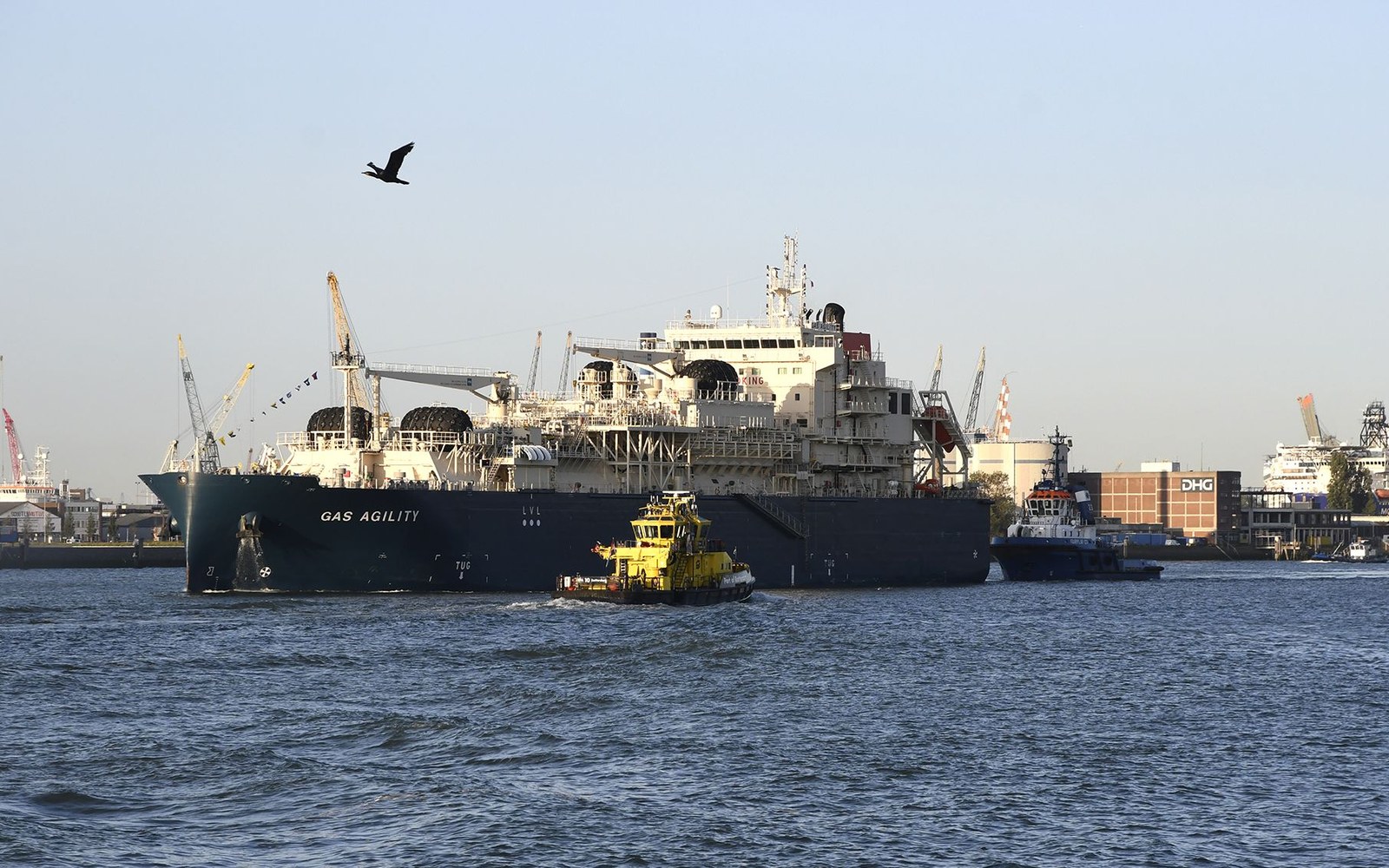
In 2025, ships calling at the Port of Rotterdam took on more than 1 million cubic metres of LNG, the first time the port has passed that mark. Of that, 17,644 cubic metres was bio LNG. The share is under 2%, and it is the LNG fleet's problem in a single number: the ships are built, the fuel is still fossil.
LNG was sold to shipowners as a transition fuel, a bridge between heavy fuel oil and whatever replaces it. The bridge has been built so well that it is starting to look like the destination. That is a mistake. Methane that escapes unburned from engines, and European rules that now price it, change the sums. An LNG ship earns its place only if it moves to bio LNG or e LNG and plugs in at berth. Our guide to alternative marine fuels and bunkering sets out the fuel options; this Briefing is about where they lead.
A fleet built on a promise
The order book tells the story. DNV counted 264 LNG fuelled ships ordered in 2024, more than double the 130 of 2023 and a record, and an operating fleet of 641 at the end of that year. In 2025, a weaker year for newbuilding overall, owners still ordered 188 LNG fuelled ships, against 61 for methanol. By DNV's count in April 2026, around 800 LNG capable ships were in operation, with 600 more on order.
Container lines lead. DNV said LNG accounted for about 58% of container ship tonnage ordered in 2025. Bunker supply has followed. The Maritime and Port Authority of Singapore reported LNG bunker sales of 0.46 million tonnes in 2024, more than four times the 0.11 million tonnes of 2023. In July 2026 it awarded eight new LNG bunkering licences.
| LNG fuelled shipping in numbers | |
|---|---|
| LNG capable ships in operation (DNV, April 2026) | about 800 |
| LNG capable ships on order (DNV, April 2026) | about 600 |
| LNG fuelled ships ordered, 2024 record / 2025 | 264 / 188 |
| FuelEU default slip, LNG Otto medium speed | 3.1% |
| Measured average slip, 18 ships (ICCT, 2024) | 6.4% |
| FuelEU default slip, LNG Diesel slow speed | 0.2% |
| LNG bunkered in Rotterdam, 2025 | over 1 million m³, of which 17,644 m³ bio LNG |
| Singapore LNG bunker sales | 0.46 million tonnes in 2024, up from 0.11 million in 2023 |
| FuelEU shore power obligation, TEN-T ports | 1 January 2030 |
The methane bill
LNG is mostly methane, and some of it leaves the funnel unburned. How much depends on the engine. FuelEU Maritime sets default slip values as a share of the gas used: 3.1% for LNG Otto dual fuel medium speed engines, 1.7% for Otto slow speed, 2.6% for lean burn spark ignited engines and 0.2% for LNG Diesel slow speed engines, which inject gas at high pressure.
Measured at sea, the numbers can be worse. In January 2024 the ICCT, with Explicit and the Dutch research body TNO, reported an average slip of 6.4% from low pressure dual fuel four stroke engines on 18 ships in Europe and Australia, roughly double the EU default of 3.1% and above the IMO assumption of 3.5%. That engine type is the most common in the LNG fleet. Slip from modern units ran at about 4% to 7% at engine loads of 25% or lower.
The arithmetic matters because methane traps far more heat than carbon dioxide. FuelEU counts it at 25 times the warming effect of CO2. On DTF's calculation with the regulation's own factors, an Otto medium speed engine slipping 6.4% would score about 104 gCO2e per MJ, worse than the 91.16 reference value that FuelEU uses for the fleet as it was in 2020.
Europe has started counting
FuelEU Maritime judges fuel on a well to wake basis, CO2, methane and nitrous oxide included. Its own defaults put fossil LNG burned in an Otto medium speed engine at 89.20 gCO2e per MJ. The 2025 limit is 89.34. The 2030 limit is 85.69, and by 2035 it is 77.94. The commonest LNG engine on fossil gas is compliant today by a margin of 0.14 grams and falls out of compliance within five years.
The EU Emissions Trading System has also widened. The European Commission confirms that methane and nitrous oxide from ships are covered from 2026. Owners surrendered allowances for 70% of their 2025 emissions this year; from 2027 they surrender for 100%, and the 2026 emissions they report will include the methane their engines slip.
Alongside, the engines keep running
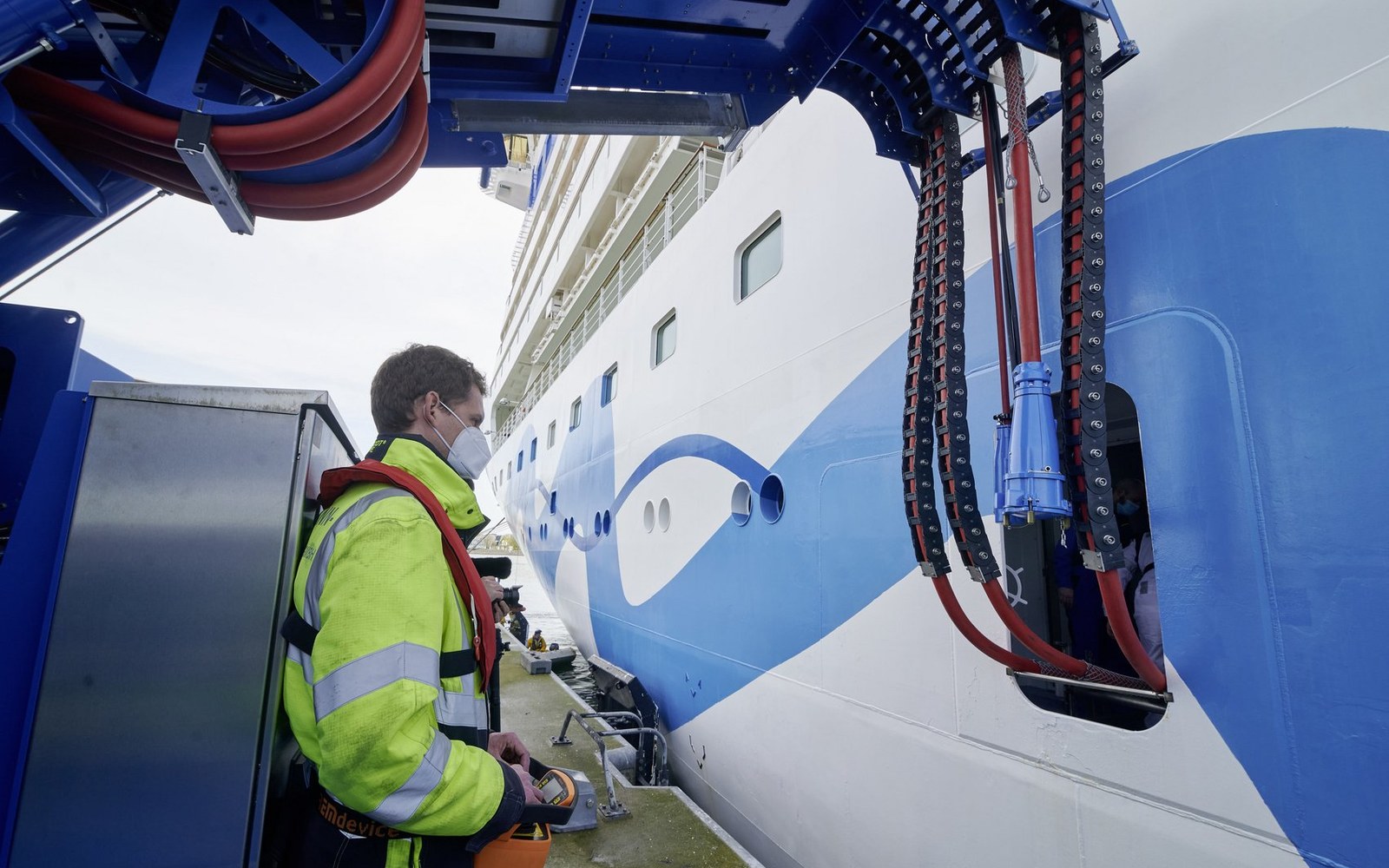
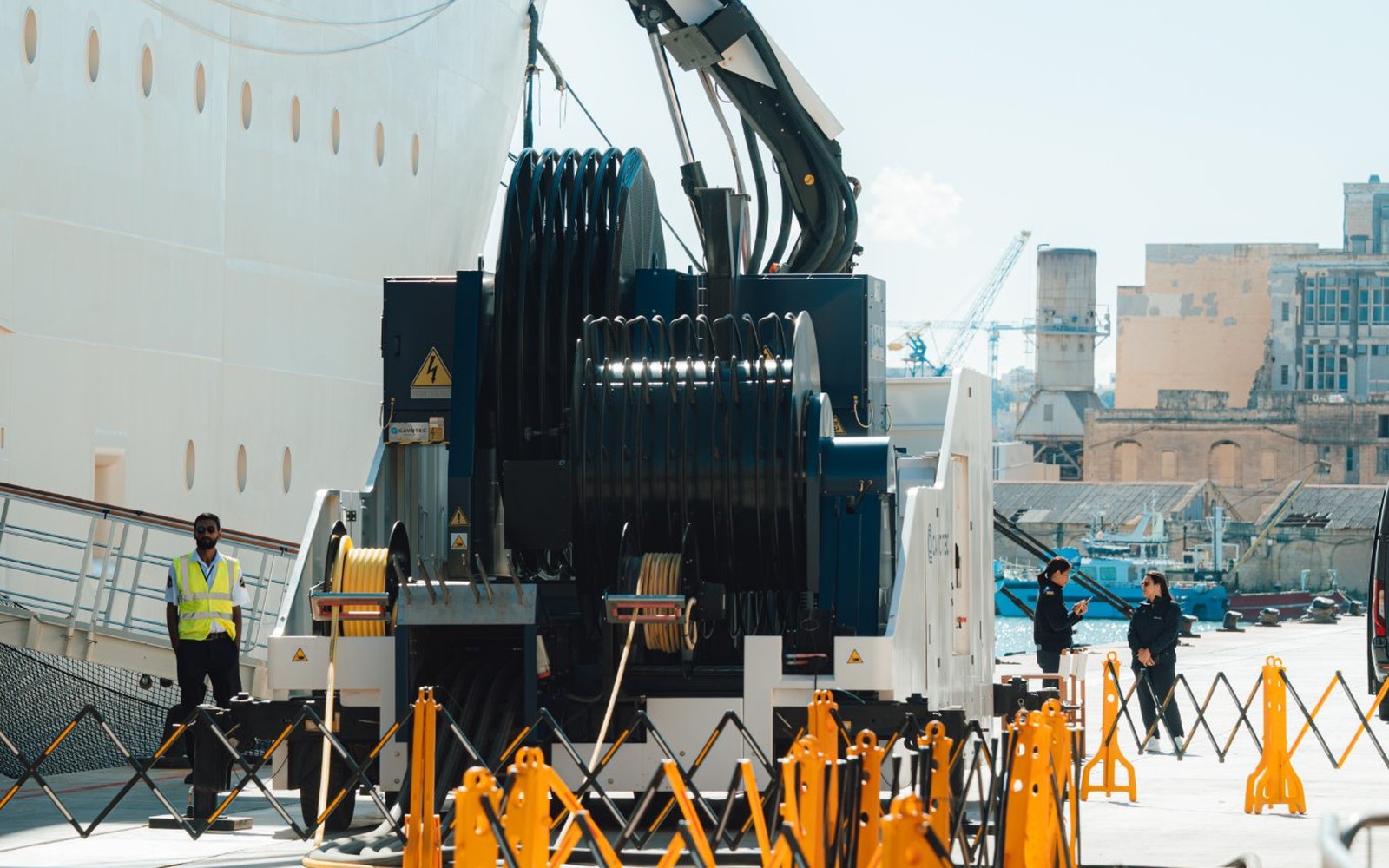
An LNG ship at berth is still a power station. Its generators run at low load to keep the hotel and cargo systems going, which is where slip tends to be highest, and the ETS counts 100% of emissions while a ship is in an EU port. FuelEU closes the gap from 1 January 2030: container and passenger ships must connect to onshore power at berth in ports covered by AFIR Article 9, the TEN-T core and comprehensive network, with the obligation extending in 2035 to any port that offers it.
The penalty for a missed connection is €1.5 per kWh of the ship's peak electrical demand at berth, for every hour it is not plugged in. Cruise lines have already been adding connections across their fleets, as we noted in our look at which cruise ships can plug in. Ports weighing gas fired supply for berths, as in Genoa's plan for an LNG power plant on the former Enel site, face the same question as owners: what the gas becomes later.
The case for staying the course
The defence of LNG is serious and deserves a fair hearing. LNG contains almost no sulphur and cuts particulates sharply, so the gains in port cities are real and immediate. High pressure two stroke engines slip very little: at FuelEU's default of 0.2%, fossil LNG in an LNG Diesel engine scores 76.08 gCO2e per MJ, already inside the 2035 limit. FuelEU also lets owners replace the defaults with certified measured values, which rewards those who cut slip.
Bio LNG and e LNG are chemically the same molecule, so they drop into the same tanks, engines and bunker vessels. DNV argued in April 2026 that this existing fleet and infrastructure can ease the switch to low emission methane. It estimated that FuelEU compliance alone could need roughly 2 to 11 million tonnes of low emission methane by 2040. Methanol supply is thin and ammonia is further off still. An owner who ordered nothing while waiting for them would have burned oil for a decade.
All true. The weak point is price and volume. DNV put bio LNG at about US$1,890 per tonne in Rotterdam in February 2026, against about US$710 for fossil LNG. Singapore has signed a memorandum with CMA CGM and Singapore LNG Corporation to study liquefied bio methane, and eight of the fourteen proposals in its LNG supply call in 2025 included bio or e methane. Those are studies and offers. Rotterdam's 2% is what has actually been delivered.
The judgement
LNG ships are not a mistake. Treating them as finished is. The fleet that ordered gas in 2024 and 2025 will spend the 2030s under tightening FuelEU limits and a full carbon price that now includes methane. Those ships stay defensible on three conditions: measured and certified slip, contracted volumes of bio LNG or e LNG, and a shore power connection at every berth that offers one.
For ports, the lesson is practical. LNG bunkering and shore power are not rival investments; the same container and cruise ships will need both, and the plug is the only option that takes emissions at berth to zero today. Those trade offs will be on the table at DTF Malta 2027.
A bridge is judged by where it lands. For LNG ships, that means a cleaner molecule at sea and a plug in port.
The views expressed are the author's own. DTF Maritime News publishes opinion and analysis from people working on port electrification, alongside its news reporting.