EU money for shore power works. Is there enough of it, in time?

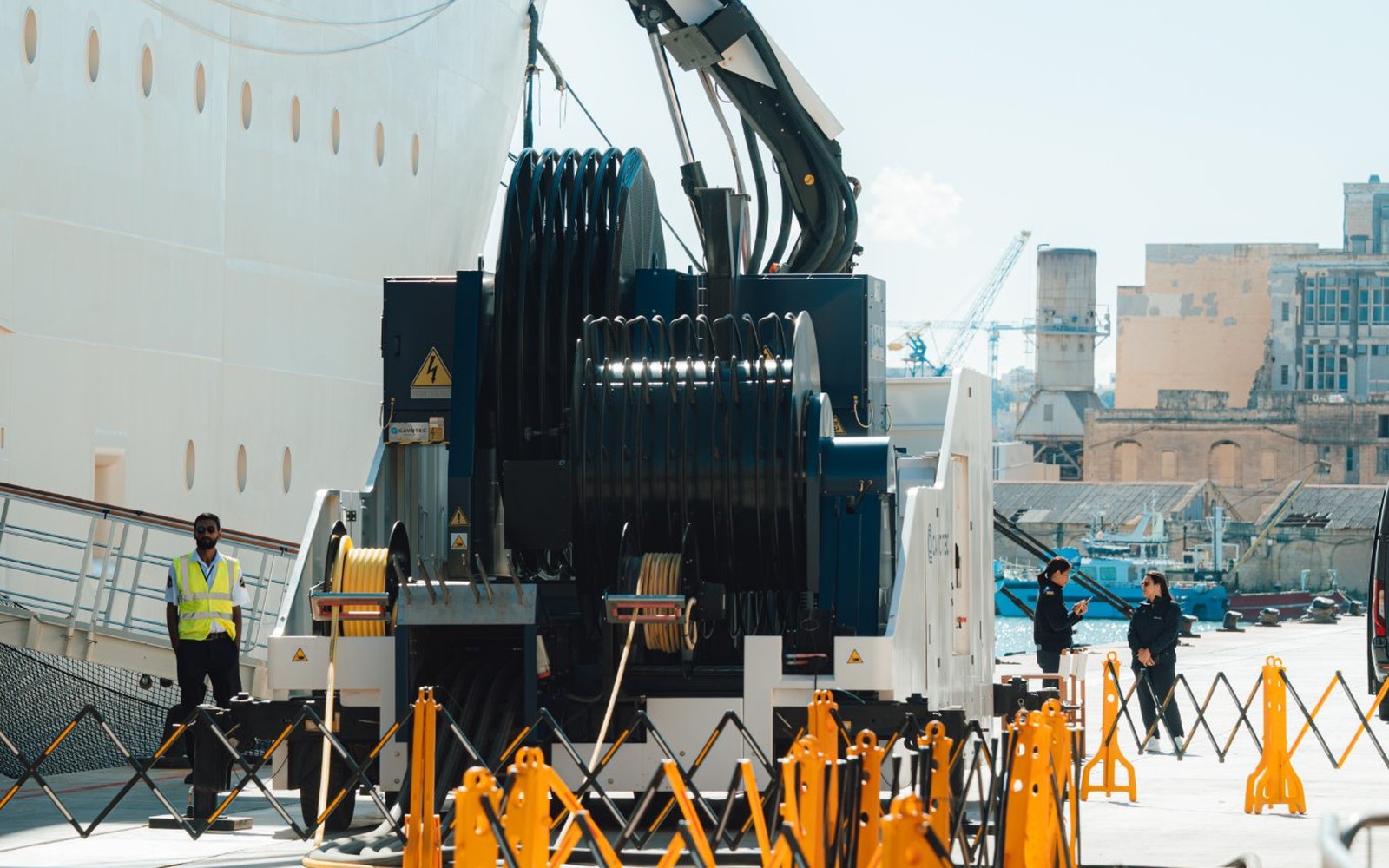
Where EU money reaches a port, shore power gets built and used. The problem is volume and timing: the fund is empty, the grid behind the plug is unfunded, and 2029 is close.
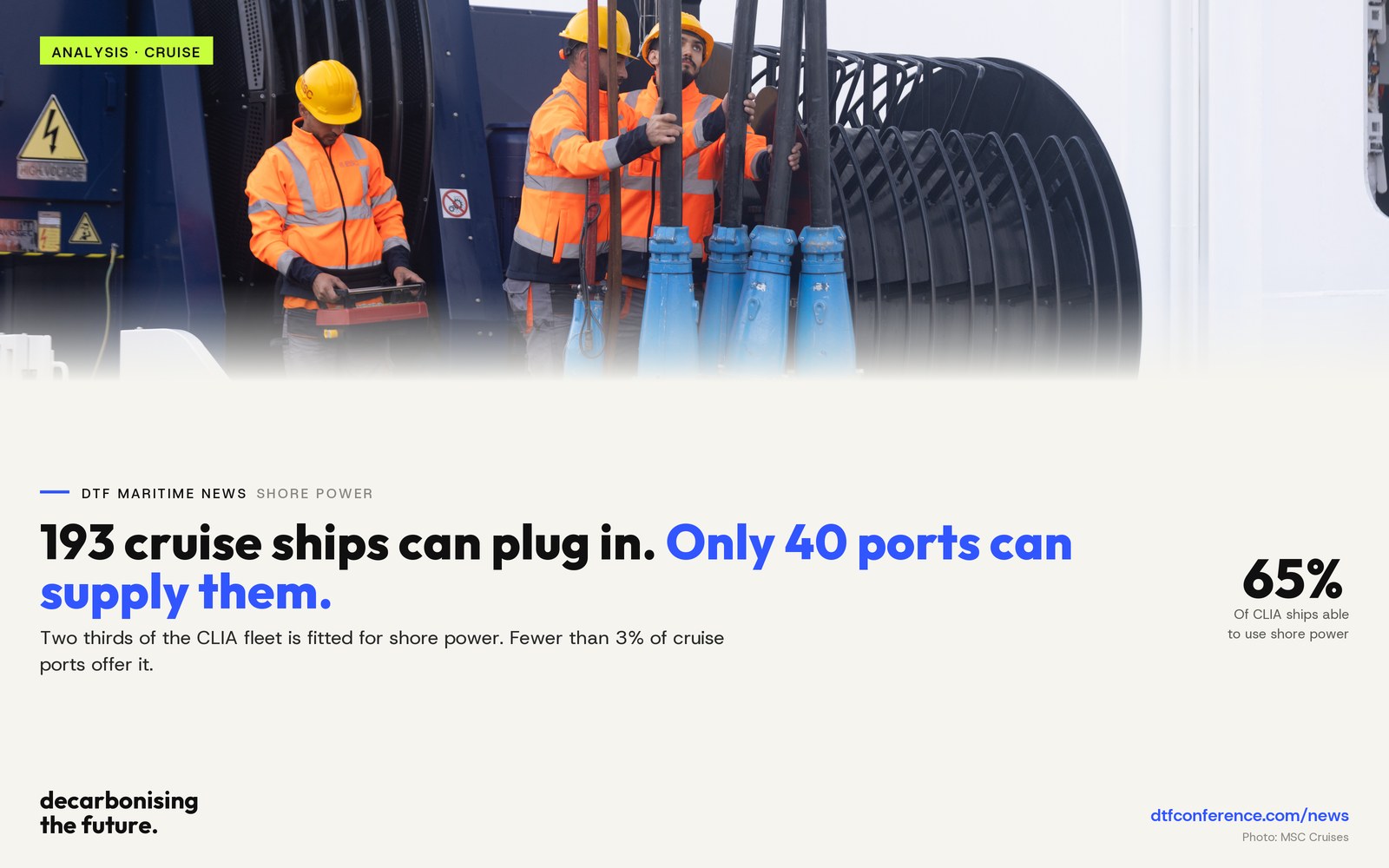
By 31 December 2029, qualifying TEN-T ports must be able to plug in large container and passenger ships for at least 90% of their calls. From 1 January 2030, FuelEU Maritime obliges those ships to connect. With the Commission now reviewing AFIR, the regulation behind that deadline, the question for Brussels is no longer whether shore power works. It is whether Europe is paying for enough of it, soon enough.
Where the money lands, it works
The record of EU funding at the quay is better than its reputation. In November 2025 the Alternative Fuels Infrastructure Facility awarded more than €600 million to 70 projects, 24 of them in ports, from Rotterdam's container terminals to Tallinn, Tarragona, HaminaKotka and HAROPA on the Seine. Barcelona bought its 25 kV port network as well as the plugs, which is the right order.
The equipment, once built, is used. ESPO's 2026 survey of 73 ports finds that ships use the shore power at 86% of the ports that offer it. And where public money is short, ports are learning to share the load: in Gijón this week, the port authority put in €3.5 million and a private operator €4.29 million, with the operator running the plant for 30 years.
There is not enough of it
The problem is volume. The facility opened with €1 billion for 2024 and 2025. Its final round drew requests of more than €1 billion and could fund only about half of them. The next round, set for March 2026, was cancelled because the money had run out.
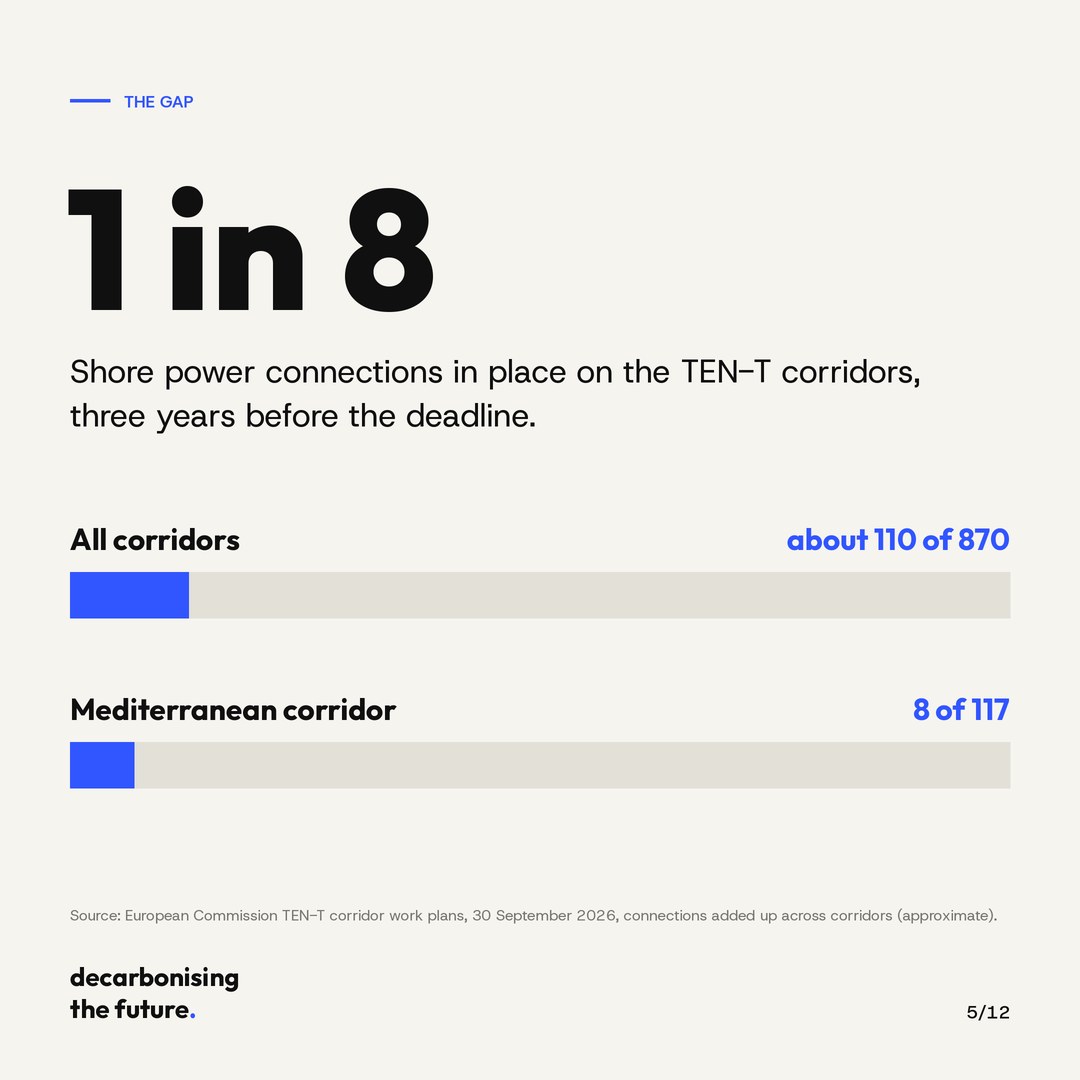
The gap it was meant to close remains wide. Added up across the Commission's TEN-T corridor work plans, published on 30 September, about 110 of some 870 required connections are in place: one in eight. On the Mediterranean corridor it is 8 of 117. ESPO's survey makes the same point from the quay: 60% of ports offer some shore power, but only about one in three has the high voltage supply a large ship needs.
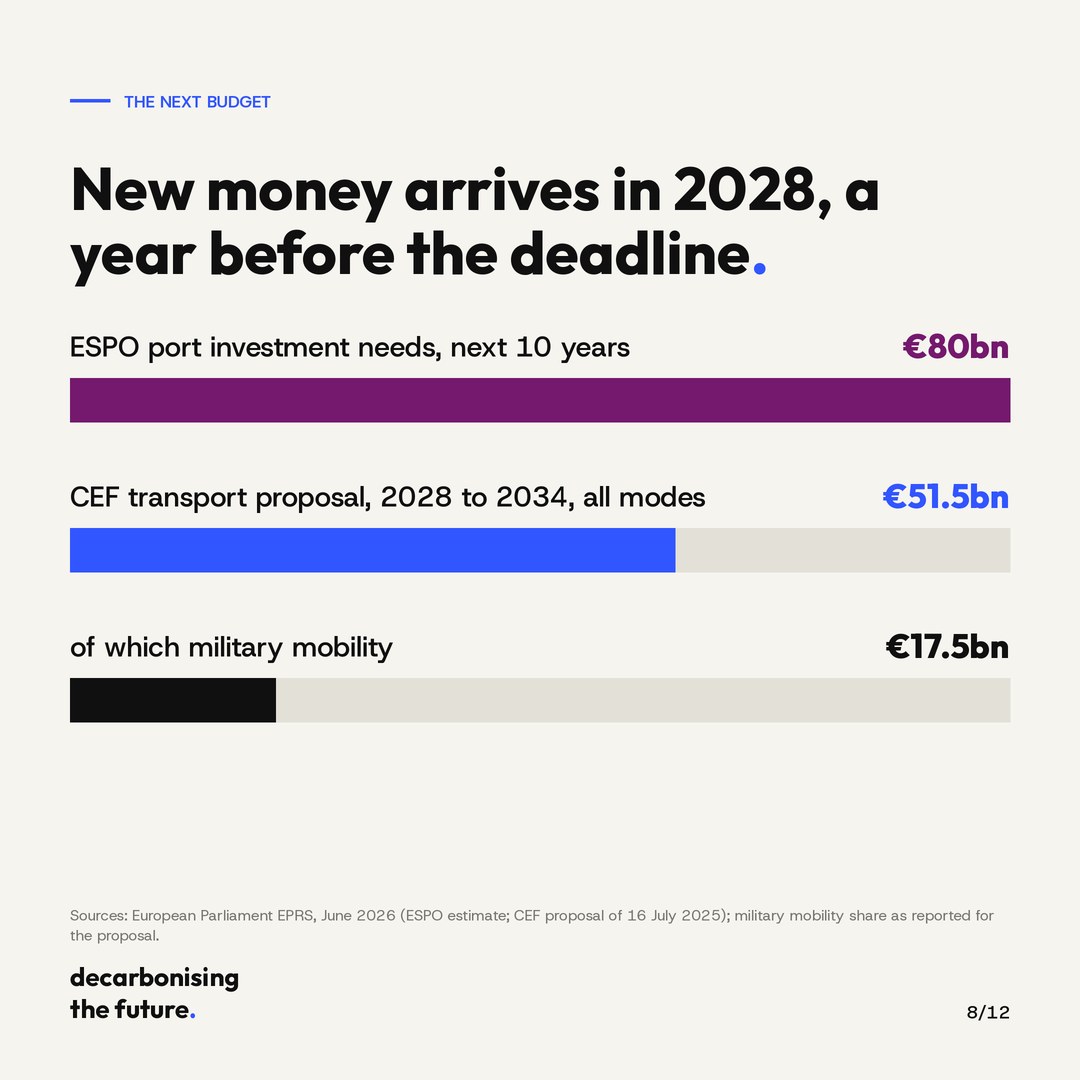
The next budget will not fill the hole in time. The Commission proposes €51.5 billion for CEF transport in 2028 to 2034, but about €17.5 billion of it is for military mobility, and ports will compete for the rest with rail. ESPO puts its members' investment needs at €80 billion over ten years. None of the new money arrives before 2028, one year before the deadline.
And it pays for the wrong end of the cable
The timing problem is sharpest where the fund does not reach. The facility covers up to 50% of shore power works and equipment. A grid connection inside the port area is eligible, but capped at 20% of the project. Reinforcing the network upstream, which is the grid operator's job, running costs and design studies are not covered at all.
That is precisely where ports are stuck. Grid connection queues exist in at least 16 member states, according to the Commission. In ESPO's survey, 54% of ports report grid connection challenges and 48% capacity constraints, while only 37% say shore power makes a strong business case. A grant can buy the converter on the quay. It cannot buy a place in the grid operator's queue, or fix an electricity tax that can make power at the berth dearer than fuel burned on board.
The practitioners agree, mostly
DTF's Port Pulse, our poll of the week, put the same questions to port authorities, energy companies, suppliers and associations. It is a small, self selected sample and proves nothing on its own. Set beside the official figures, it shows how the people closest to the work read them.
| Question | Official figure | Port Pulse |
|---|---|---|
| Is the grid the problem? | 54% of ESPO ports report grid connection challenges | 55% say grid capacity breaks first |
| Does shore power pay? | 37% of ESPO ports say it makes a strong business case | 36% say the business case breaks first |
| Are the ships ready? | CLIA: 166 cruise ships, 58% of the fleet, can plug in; over 75% by 2028 | 0% say ship readiness breaks first |
| Will ports be ready? | About 110 of 870 connections in place | 73% expect about half; 0% expect most |
On the grid and the business case, the two line up almost exactly. The one place they diverge is readiness. Practitioners expect about half of Europe's ports to make the deadline. On the official count, half would be an achievement.
Italy: when the rules lag the money
Italy shows that money alone does not deliver service. More than €800 million from its recovery and complementary funds sits behind 52 cold ironing projects, alongside a €570 million scheme cutting system charges on shore power until 2033. No member state has put more public money on the quay. But the guidelines for selling that power were only adopted in July 2026, after most of the works were funded. The ministry expects most ports to connect ships soon. The lesson is sequencing, not waste: the tariff and the operator have to be ready when the cable is.
Will ports be ready?
Most will not. The likely outcome is a two speed Europe. Ports in Scandinavia and the Low Countries that started early and secured grid capacity will make the deadline or come close. Much of the Mediterranean, where cruise calls are concentrated and corridor coverage is in single digits, will not. Because FuelEU excuses a ship that calls where there is no socket, the cost of a missed deadline falls on port cities' air rather than on anyone's balance sheet.
What the AFIR review should do
- Refill the fund now. A port energy line in CEF 2028 to 2034, and a bridge before it, so the next round is not cancelled for lack of money.
- Pay for the grid end. Lift the 20% cap on grid connection costs for shore power, and give grid operators a deadline that matches the port's.
- Back operators, not only assets. EIB guarantees for concessions like Gijón, where the private side carries the utilisation risk.
- Spend the carbon money. Earmark maritime ETS revenue for port electrification, rather than encouraging member states to do so.
- No new scope without new money. Widening AFIR to smaller ships and tankers before the first deadline is funded would only lengthen the list of ports that miss it.
Mediterranean ports will be at the centre of this debate at DTF PortFocus Barcelona in February 2027.
EU money builds plugs that ships use. The question for the AFIR review is whether there will be enough of it before the date Brussels has already set.
The views expressed are the author's own. DTF Maritime News publishes opinion and analysis from people working on port electrification, alongside its news reporting.