Trondheim Havn approves NOK 202 million cruise shore power and quay extension at Brattøra
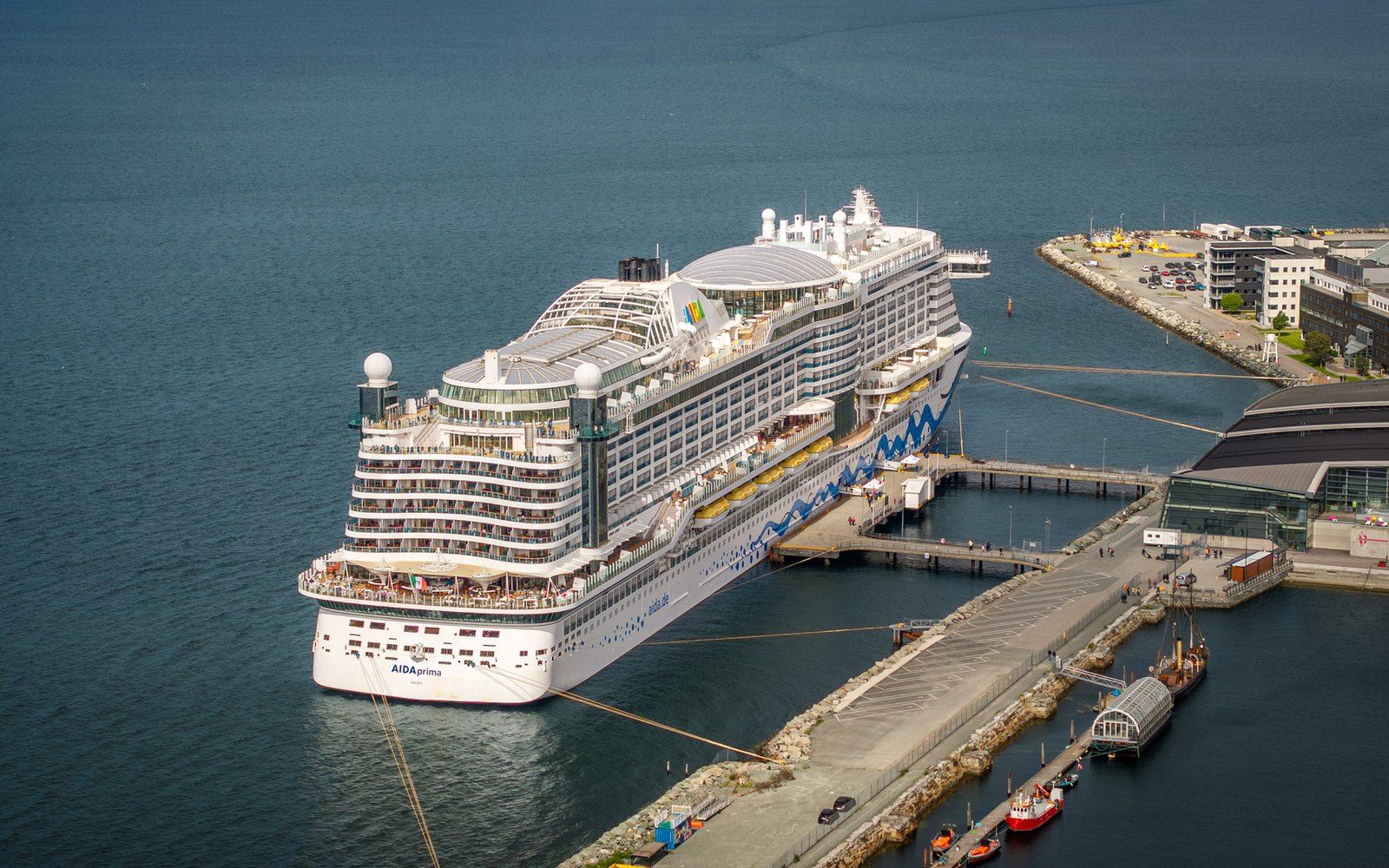
The board of Trondheim Havn IKS decided on 3 November 2026 to build high voltage shore power for cruise ships at Brattøra and to extend the cruise quay by 55 metres. The project is estimated at NOK 202 million, of which NOK 20 million comes from Enova, leaving an investment of NOK 182 million for the port.
The port expects the plant to be in operation in 2029. DTF's guide to shore power explains how cruise connections of this size work.
At a glance
| Topic | |
|---|---|
| Owner | Trondheim Havn IKS |
| Decision | Board, 3 November 2026 |
| Cost | NOK 202 million, including a NOK 20 million Enova grant |
| Quay | Extended by 55 m, from 96 m to 151 m |
| Power | 4.9 MW all year from 2028; 12 MW from May to October |
| Coverage | About 98% of future cruise calls |
| In operation | 2029 |
What will be built
The shore power plant will serve the cruise quay outside Pirbadet at Brattøra and is planned as a modular installation on Brattørmoloen. The quay will be extended towards the southwest, from 96 metres to 151 metres, with construction planned for 2027.
The longer quay is what makes the plug useful. Trondheim Havn says it will let about 98% of future cruise calls connect to shore power, and allow larger ships to moor all year round.
The grid is the limiting factor
The port has applied for 12 MW all year. For now it has 4.9 MW all year from 2028, rising to 12 MW during the summer season from May to October. The application for full year capacity is still in the queue for a grid connection with Statnett, the national transmission operator.
The split matches the cruise calendar in Trondheim, where the 2026 season ran from March to November.
Ships are already ready
Trondheim Havn says 90% of cruise calls in Trondheim were already prepared for shore power in 2025. The port has supplied shore power to the coastal route ships, Kystruten, since 2022.
The port cites EU requirements from 2030 as one reason for the investment. Under the EU's FuelEU Maritime rules, passenger ships above 5,000 GT must connect to shore power at berth in TEN-T ports from 1 January 2030.
Emissions and the local economy
Cruise accounts for about 0.8% of Trondheim municipality's emissions of roughly 454,000 tonnes of CO2 a year. The port has not published a tonnage for the savings from shore power.
A 2024 analysis by Menon for the port estimated that cruise passengers spent about NOK 100 million in Trondheim and shipowners about NOK 27 million. The port presents the investment as a way to keep that business as rules tighten.
Why it matters for ports
Trondheim shows the order of work for a mid sized cruise port: secure the grid early, size the quay to the ships, then build the plug.
- Seasonal grid capacity can open the door before a full year connection is available.
- Quay length decides how many calls can actually connect, not just the number of sockets.
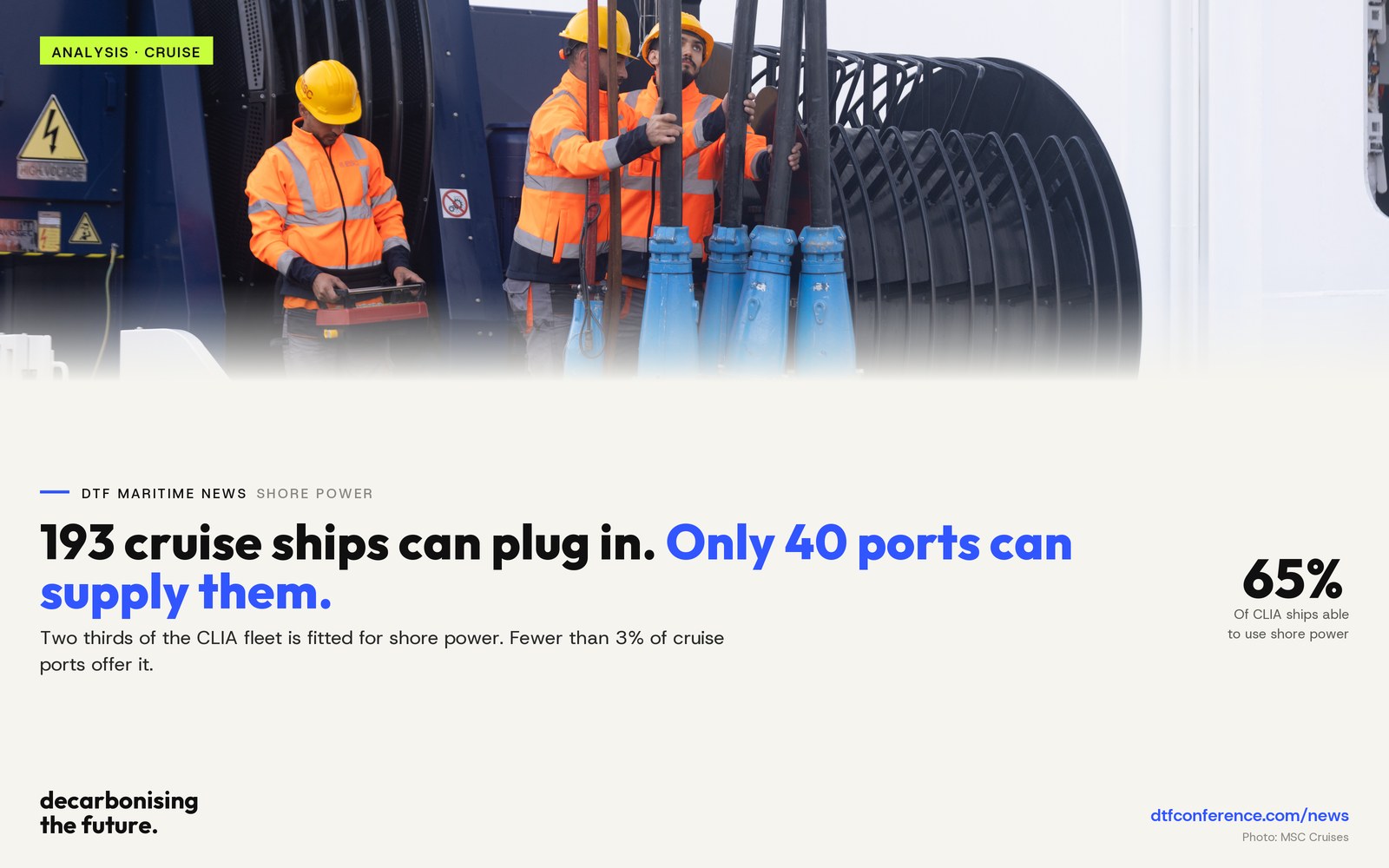
The gap between ships fitted for shore power and ports able to supply them is set out in DTF's analysis of cruise lines and shore power, and grid queues are covered in EU shore power and grid connections. Cruise port electrification will be on the agenda at DTF Malta 2027.
In Trondheim, a longer quay is what turns a plug into 98% coverage.