Türkiye's port operators take shore power case to COP31: grid, standards and finance together
TÜRKLİM, the Port Operators Association of Türkiye, set out the Turkish port sector's position on shore power at COP31 in Antalya on 11 November 2026. Its Secretary General, Faruk Doğan, spoke on a panel organised by the International Chamber of Shipping on the electrification pathway for shipping and energy.
The message was that onshore power supply and electric port equipment can only scale if grid capacity, compatibility between ship and shore equipment, and financing are solved together. DTF's guide to shore power covers each of those three pieces.
At a glance
| Topic | |
|---|---|
| Event | ICS session on the electrification pathway, COP31 Blue Zone, 11 November 2026 |
| Speaker | Faruk Doğan, Secretary General, TÜRKLİM |
| TÜRKLİM | 77 member ports listed in its 2026 sector report |
| Shore power in service | Asyaport, Tekirdağ, since October 2024 |
| National rules | No binding shore power law; credit under the Green Port Regulation |
| National target | Net zero by 2053 |
What the ports asked for
TÜRKLİM argued that ships' demand for shore power has to be lined up with the investment timelines of ports and grid operators, so that sockets, ships and supply arrive at the same time. It called for close work between port operators, shipowners, the energy sector and public authorities.
The session took place a day after more than 30 maritime organisations backed a COP31 goal for electricity to supply 20% of international shipping's energy by 2035, with power supplied at berth counted towards it.
Where Türkiye stands
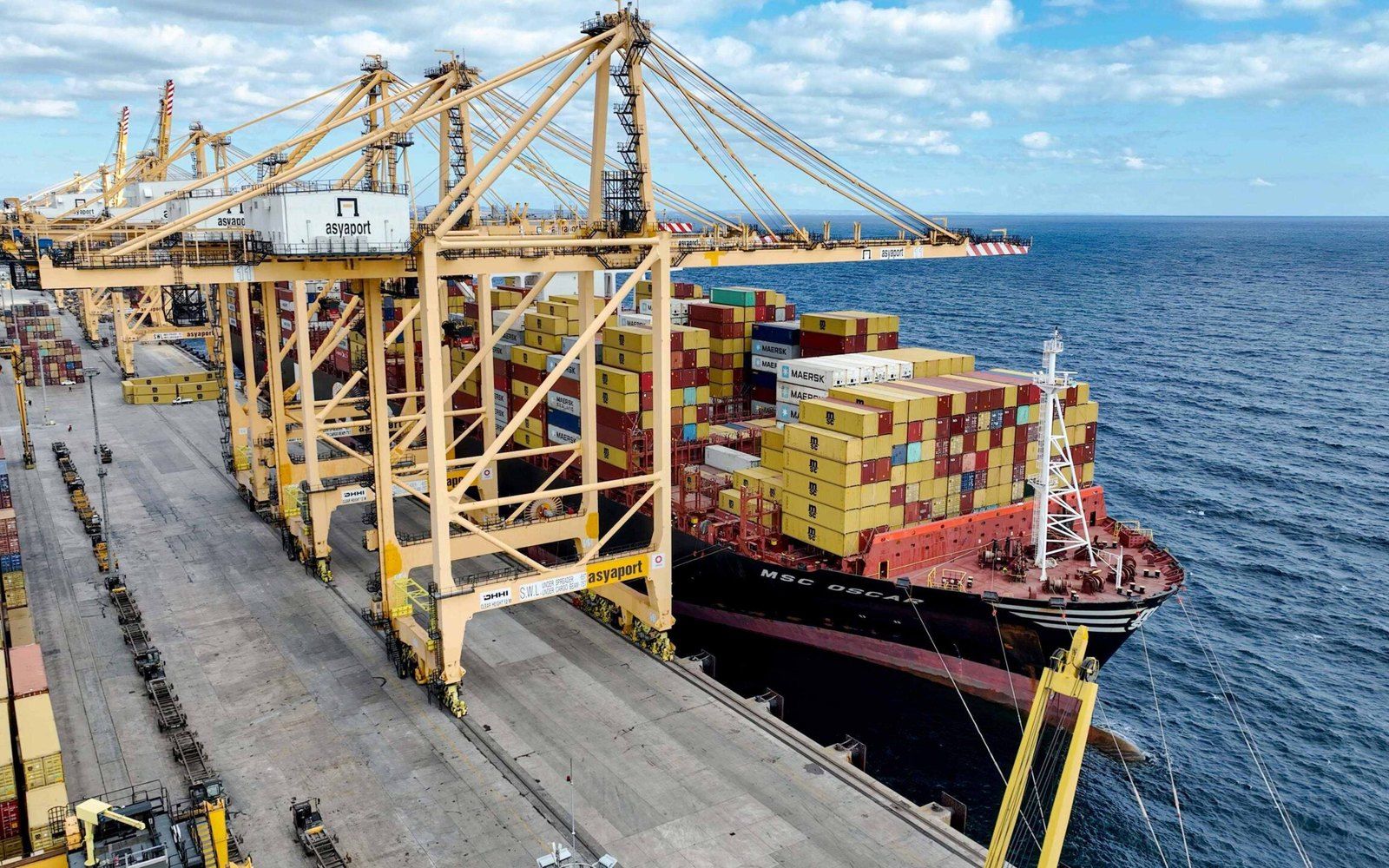
One Turkish terminal supplies shore power to ships so far. Asyaport in Tekirdağ, the country's largest container terminal, connected its first vessel, the MSC Oscar, on 25 October 2024. The system can serve two mainline and three feeder ships at the same time and was a US$10 million project built over more than three years.
In its entry for the IAPH World Ports Sustainability Program, Asyaport reports 47 container ships connected, more than 2.5 million kWh supplied and about 700 tonnes of CO2 avoided.
Elsewhere, studies have not yet turned into plugs. A 2025 study in the journal Ulaştırma ve Altyapı lists feasibility work at Marport in 2014 and at Kuşadası cruise port in 2018, neither built, and technical preparation at Borusan Port.
The rules gap
Türkiye has no binding law requiring shore power. The Green Port Regulation gives credit to ports with at least one berth equipped for it, and TÜRKLİM's 2026 sector report notes that the latest amendment makes environmental standards mandatory for new and expanding facilities.
The same 2025 study identifies the sale of electricity to ships as a barrier: there is no specific licence or tariff for shore power, so selling it requires a supply licence. Türkiye has set a net zero target for 2053.
Why it matters for ports
Turkish ports compete with EU ports for the same cruise and container services. From 2030, container and passenger ships above 5,000 GT must use shore power at berth in TEN-T ports under FuelEU Maritime, so lines will arrive in Türkiye with ships already fitted to plug in.
- A clear tariff and licence for selling power to ships would remove the first barrier.
- Grid upgrades need to be planned with the ship calls they will serve.
DTF covered the coalition goal in COP31 sets 20% electrification goal for shipping, and the grid problem in Europe in EU shore power and grid connections. Eastern Mediterranean ports will be part of the discussion at DTF Malta 2027.
Türkiye has one working shore power terminal and a port sector asking for the grid, the rules and the money to arrive together.