What AFIR is and when it applies
The Alternative Fuels Infrastructure Regulation, Regulation (EU) 2023/1804, sets binding minimum targets for the infrastructure that zero and low emission transport needs across the EU. It was adopted on 13 September 2023, entered into force on 12 October 2023 and has applied since 13 April 2024. It repealed Directive 2014/94/EU, the earlier alternative fuels directive.
Because AFIR is a regulation, it applies directly in every Member State without national transposition. The targets fall on Member States, which must make sure the infrastructure exists in the right places by the dates the regulation sets.
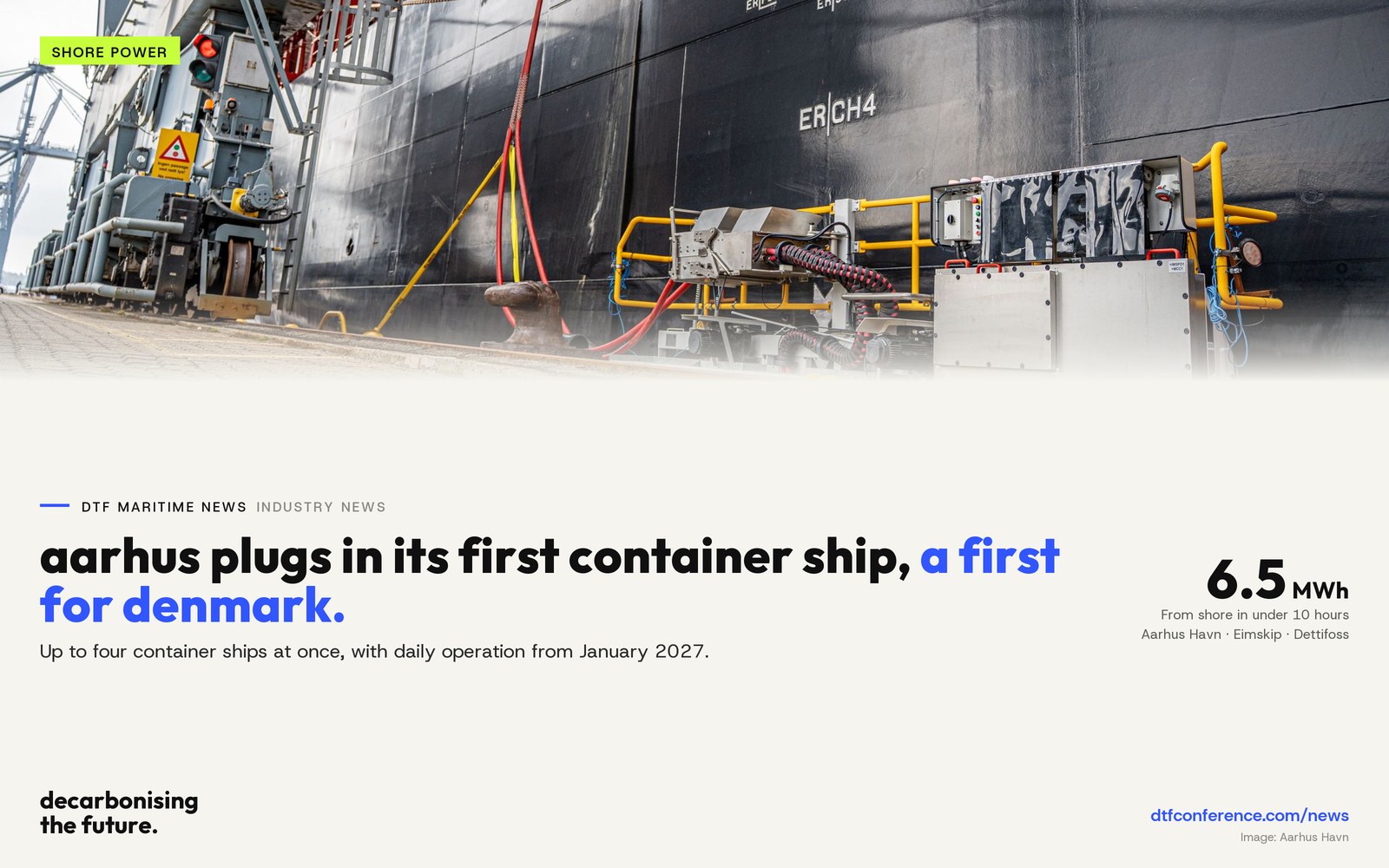
For ports, AFIR does three things. It requires shore side electricity, also called onshore power supply (OPS), at busy TEN-T maritime ports by 31 December 2029. It requires shore power at TEN-T inland waterway ports. It requires LNG refuelling points at TEN-T core maritime ports.
AFIR also covers road transport. Member States must provide at least 1.3 kW of public charging capacity for every registered battery electric car and van, and heavy duty charging pools every 60 km in each direction on the TEN-T core network by 2030, each of at least 3,600 kW. This guide focuses on the port obligations.
Shore power at maritime ports: the 2030 obligation
Article 9 requires Member States to make sure that TEN-T core and comprehensive maritime ports can supply shore power to seagoing container ships and seagoing passenger ships above 5,000 GT. The deadline is 31 December 2029, so the capacity must be in place from 1 January 2030.
The obligation does not apply to every port. It applies per ship type, only where a port's traffic passes a threshold based on the average annual number of port calls over the last three years. Where a port passes the threshold, it must be able to serve at least 90% of the calls by that ship type.
| Ship type (above 5,000 GT) | Ports covered | Traffic threshold (average annual port calls, last three years) | Minimum shore power coverage | Deadline |
|---|---|---|---|---|
| Seagoing container ships | TEN-T core and comprehensive maritime ports | More than 100 | 90% of port calls | 31 December 2029 |
| Roll on roll off passenger ships and high speed passenger craft | TEN-T core and comprehensive maritime ports | More than 40 | 90% of port calls | 31 December 2029 |
| Other seagoing passenger ships, including cruise ships | TEN-T core and comprehensive maritime ports | More than 25 | 90% of port calls | 31 December 2029 |
A port can fall in scope for one ship type and not another. A cruise port with 30 cruise calls a year but few ferries must equip for cruise ships only. Each ship type is assessed separately against its own threshold.
What counts as a port call, and the exemptions
AFIR links its port call count to FuelEU Maritime. Port calls covered by the at berth exceptions in Article 6(5) of Regulation (EU) 2023/1805 are not counted towards the totals. Those exceptions include stays at the quayside of under two hours, ships using an approved zero emission technology at berth instead of shore power, and unscheduled calls for reasons of safety or saving life at sea.
Article 9 also contains a geographic exemption. Maritime ports on islands, in the outermost regions of the EU, or in Ceuta and Melilla that are not directly connected to the mainland grid, or to a neighbouring country's grid in the case of Ceuta and Melilla, do not have to meet the shore power targets.
That exemption is temporary. The obligation applies once a grid connection is completed, or once the area generates enough non fossil electricity locally to cover its needs. This matters for island Member States and for ports that rely on isolated island grids.
LNG refuelling at TEN-T core maritime ports
Article 11 requires Member States to make sure an appropriate number of refuelling points for liquefied methane, including LNG, is in place at TEN-T core maritime ports by 31 December 2024. The aim is to let seagoing ships using LNG circulate across the TEN-T core network.
The obligation is not a fixed number per port. Member States designate the core maritime ports that must offer LNG in their national policy frameworks, taking account of port development, existing refuelling points and current and future market demand. Neighbouring Member States must cooperate where needed to give adequate coverage.
AFIR sets no binding deployment targets for hydrogen, ammonia or methanol bunkering in ports. Instead, Member States must describe their plans for those fuels in their national policy frameworks.
Inland waterway ports
Article 10 sets a simpler test for inland ports. Every TEN-T core inland waterway port needed at least one shore power installation for inland waterway vessels by 31 December 2024.
Every TEN-T comprehensive inland waterway port must have at least one installation by 31 December 2029. There is no traffic threshold and no percentage coverage requirement for inland ports. The obligation is one installation per port.
National policy frameworks, reporting and review
Each Member State must set out how it will meet AFIR in a national policy framework. Draft frameworks were due with the European Commission by 31 December 2024. The Commission issues recommendations within six months of a draft, and final frameworks are due by 31 December 2025.
For ports, the framework must designate the core maritime ports offering LNG and give an overview of alternative fuel infrastructure in maritime ports beyond LNG and shore power, such as hydrogen, ammonia, methanol and electricity. Member States may also cover electricity and hydrogen for port services.
Member States then report on progress. The first national progress report is due by 31 December 2027 and every two years after that. The regulation also requires the Commission to review AFIR by the end of 2026, and the review is considering whether to extend the scope of the shore power rules for maritime ports.
How AFIR works with FuelEU Maritime
AFIR and FuelEU Maritime were adopted on the same day as two halves of one system. AFIR places the obligation on Member States and ports to supply shore power. FuelEU Maritime places the obligation on shipping companies to use it.
From 1 January 2030, container and passenger ships above 5,000 GT must connect to shore power, or use an approved zero emission technology, at berth in the TEN-T ports covered by AFIR Article 9. From 1 January 2035, the same duty applies at every EU port where shore power is available. A ship that fails to connect without a valid exception pays a FuelEU penalty of EUR 1.5 per kWh, based on its electrical power demand at berth and the hours of non compliance.
For a port authority, this means the 2030 deadline has two edges. The port must have the capacity in place, and from the same date the ships calling there face penalties if they do not plug in. Ports that plan grid connections, berth equipment and tariffs now are building for demand that the law already guarantees.
Questions, answered
What is AFIR?+
AFIR is the Alternative Fuels Infrastructure Regulation, Regulation (EU) 2023/1804. It sets binding minimum targets for charging, refuelling and shore power infrastructure across the EU and has applied since 13 April 2024.
When must EU ports provide shore power under AFIR?+
TEN-T core and comprehensive maritime ports that pass the traffic thresholds must be able to supply shore power for at least 90% of port calls by container and passenger ships above 5,000 GT by 31 December 2029.
Which ships does the AFIR shore power requirement cover?+
It covers seagoing container ships, roll on roll off passenger ships, high speed passenger craft and other passenger ships such as cruise ships, all above 5,000 GT. Tankers, bulk carriers and other cargo ships are not covered by the Article 9 targets.
What are the AFIR port call thresholds?+
A port is in scope for a ship type when its average annual port calls over the last three years exceed 100 for container ships, 40 for roll on roll off passenger ships and high speed passenger craft, or 25 for other passenger ships, counting ships above 5,000 GT only.
Are any ports exempt from the AFIR shore power targets?+
Ports on islands, in outermost regions, or in Ceuta and Melilla that are not directly connected to the mainland grid are exempt. The exemption ends once a grid connection is completed or enough non fossil electricity is generated locally.
Does AFIR require LNG bunkering in ports?+
Yes. Member States had to make sure an appropriate number of LNG refuelling points was in place at TEN-T core maritime ports by 31 December 2024, with the ports designated in their national policy frameworks.
What is the difference between AFIR and FuelEU Maritime?+
AFIR requires Member States and ports to provide shore power. FuelEU Maritime requires container and passenger ships above 5,000 GT to use it at berth from 1 January 2030, with penalties for ships that do not connect.
- Regulation (EU) 2023/1804 on the deployment of alternative fuels infrastructure (EUR-Lex)
- Regulation (EU) 2023/1804, consolidated English text (Lexaris)
- Regulation (EU) 2023/1804, Article 9 (gesetze.legal)
- Regulation (EU) 2023/1804, Article 10 (gesetze.legal)
- European Commission: Questions and answers on Regulation (EU) 2023/1805
- Bureau Veritas: Alternative Fuels Infrastructure Regulation
- Lloyd's Register: FuelEU zero emission requirements for energy used at berth
- Net Zero Compare: EU Alternative Fuels Infrastructure Regulation
- FASI: Brussels seeks feedback on the revision of the AFIR Regulation
Figures are checked against the regulation text and official sources listed above. Spotted something out of date? Write to media@dtfconference.com.
DTF 2027
Meet the ports, shipping lines and utilities delivering this in 2027.