Los Angeles and Long Beach mark 20 years of the Clean Air Action Plan aboard hybrid harbour boat El Escudo
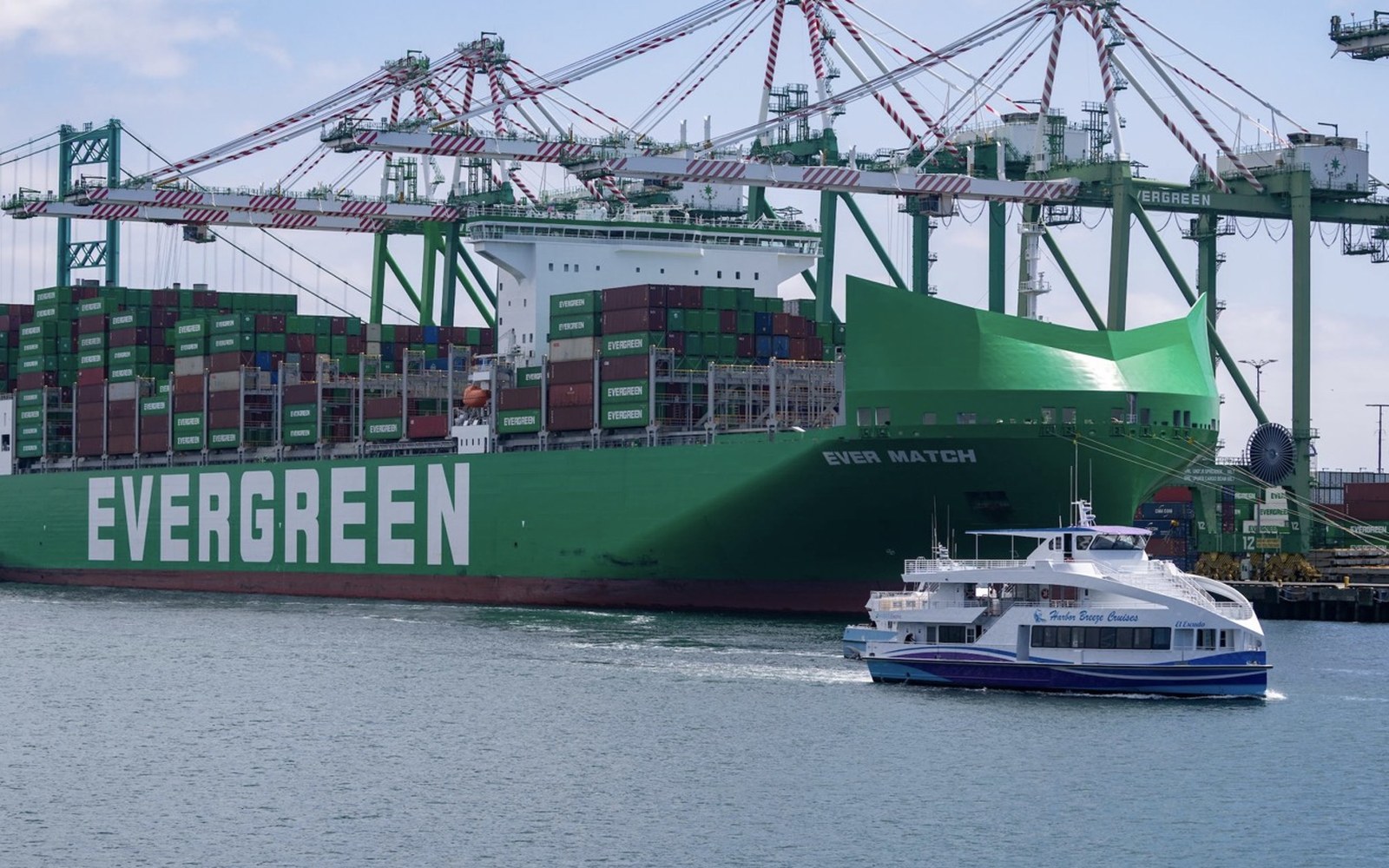
The Port of Los Angeles and the Port of Long Beach will mark 20 years of the San Pedro Bay Ports Clean Air Action Plan on Wednesday 2 December 2026. The day combines a stakeholder meeting with a harbour tour of the whole port complex aboard El Escudo, a hybrid tour boat that can run on battery power alone.
The choice of vessel fits the plan's next phase. Ships at berth already plug in, as set out in DTF's guide to shore power, and the ports are now working through the smaller boats that move around the harbour every day.
At a glance
| Topic | |
|---|---|
| Event | Clean Air Action Plan 20th anniversary, 2 December 2026, 09:30 to noon, from Banning's Landing Community Center |
| Plan | Adopted by both ports in November 2006, updated in 2010 and 2017 |
| Results at Los Angeles | Since 2005: diesel particulates down 90%, NOx down 72%, SOx down 98%, container volume up 37% |
| Vessel | El Escudo, 108 ft (32.9 m), 350 passengers, Harbor Breeze Cruises |
| Builder | All American Marine, Bellingham, to a Teknicraft Design |
| Battery use | Up to two hours on battery alone; at least 30% of operating time with zero emissions |
| Funding | US$31 million CARB grant for the LA MER project, with US$30 million in matching funds |
Twenty years of the plan
The two ports adopted the Clean Air Action Plan in November 2006, with 2005 as the baseline. Its 2017 update set targets for zero emission cargo handling equipment by 2030 and zero emission drayage trucks by 2035.
The results at Los Angeles are covered in DTF's report on the port's 2025 emissions inventory. Harbour craft are part of that picture: 55% of the tugs, ferries and work boats calling there met Tier 3 or Tier 4 engine standards in 2025, against 20% in 2017 and none in 2005.
The voluntary plan now has a binding partner. In November 2025 the ports signed a cooperative agreement with the South Coast Air Quality Management District, with a first draft infrastructure plan due in May 2027, approved plans for every equipment category by the end of 2029, and penalties of US$50,000 to US$200,000 per violation.
The boat
El Escudo is a 108 ft monohull for up to 350 passengers, ordered by Harbor Breeze Cruises in January 2025 and built by All American Marine to a Teknicraft Design. It made its first trip along the Port of Los Angeles Main Channel on 25 May 2026.
An ABB parallel hybrid system pairs BorgWarner batteries with twin MAN Tier 4 diesels fitted with catalytic reduction and particulate filters. The boat can run fully electric, on diesel or in hybrid mode, and can charge its batteries underway or from shore. It can run for up to two hours on battery power alone, with at least 30% of its operating time zero emission and some trips run entirely on battery.
Who is paying
El Escudo is part of LA MER, a marine emission reduction project administered by the Port of Los Angeles. It is backed by a US$31 million grant from the California Air Resources Board and US$30 million in partner funds, including US$7.5 million from Harbor Breeze for this boat. A second hybrid vessel follows under the same project.
Each port has committed US$250,000 to a harbour craft technology study and will fund at least 50 excursion trips on zero emission capable vessels over a 12 month demonstration. For charging and other harbour craft technology, Los Angeles has committed US$2.45 million and Long Beach US$1.05 million. The project is expected to cut more than 60 tons of emissions a year.
Why it matters for ports
- Small harbour boats run every day close to the waterfront, so batteries and shore chargers for them bring air quality gains to the communities next to the port.
- Funding the trips as well as the boats gives the ports operating data on how often a hybrid can really run on battery.
Harbour craft electrification will be on the agenda at DTF Malta 2027.
Twenty years on, the San Pedro Bay plan has moved from the ships at berth to the boats that work the harbour.