Hyke F-15 Shuttle used 10 to 12 kWh an hour in 14 month Fredrikstad ferry pilot
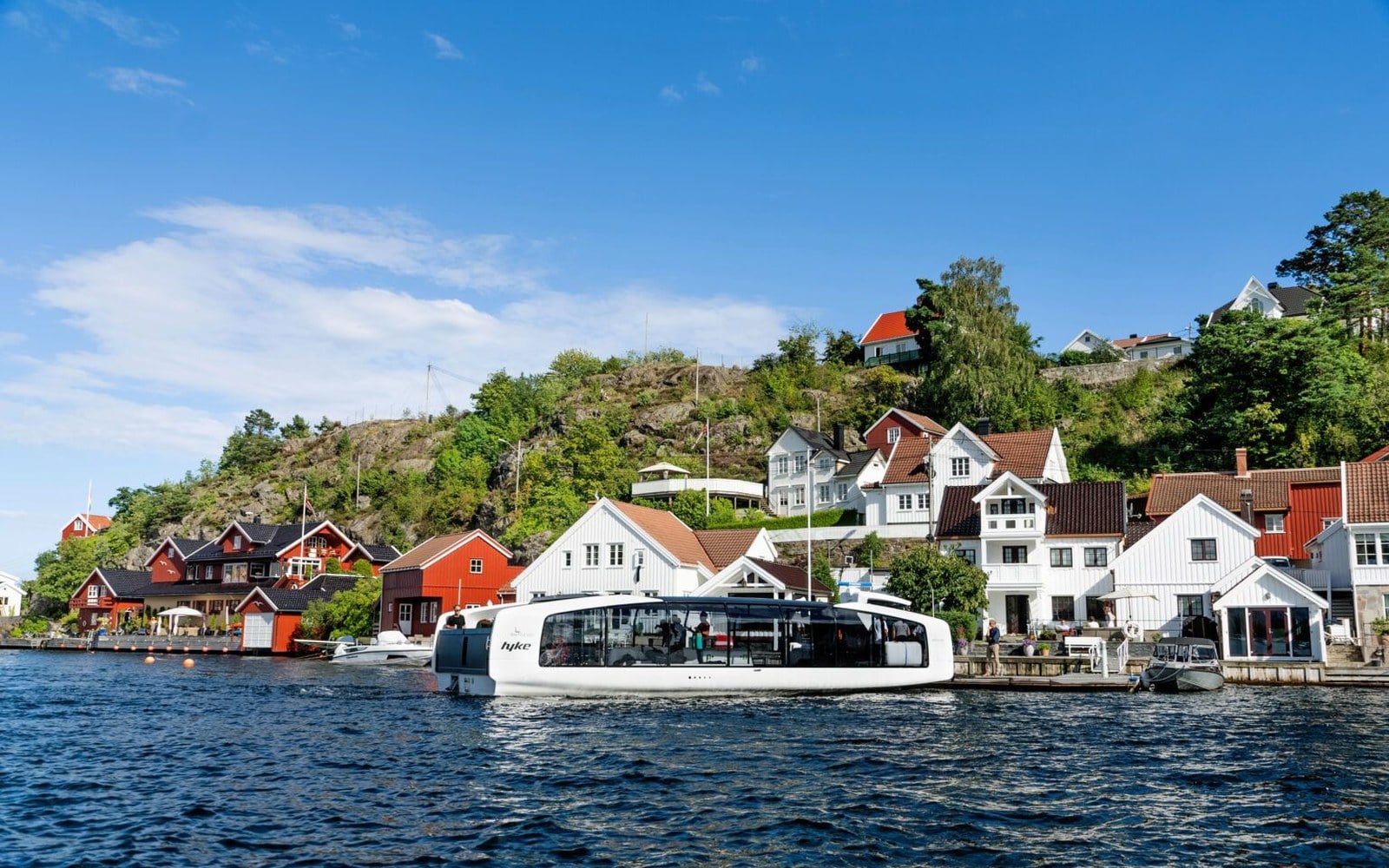
An electric passenger ferry built by Norwegian company Hyke used 10 to 12 kWh per operating hour during 14 months of public service in Fredrikstad, Hyke said, citing the municipality's evaluation of the pilot. The company puts a diesel ferry on the same kind of crossing at an estimated 60 to 80 kWh per hour. The Hyke F-15 Shuttle carried more than 41,000 passengers on a 225 metre river crossing between April 2024 and July 2025.
The figures matter most at the quay. A ferry that draws around 10 kWh an hour can run a full day on one charge and refill from a standard fast charger, which changes what a city has to build at the berth. DTF's guide to electric ferries and port charging sets out how those choices work on larger routes.
At a glance
| Topic | |
|---|---|
| Vessel | Hyke F-15 Shuttle, 14.9 m, up to 50 passengers |
| Route | Bekkhus to Vaterland, Fredrikstad, 225 m, about two minutes |
| Service | April 2024 to July 2025, about 14 months |
| Passengers | More than 41,000 |
| Energy use | 10 to 12 kWh per operating hour (diesel estimate 60 to 80 kWh) |
| Battery and charging | 196 kWh; 150 kW DC or 22 kW AC |
| Funding | Klimasats grant of NOK 2.1 million; Horizon Europe SUM project; Bypakke Nedre Glomma |
The pilot
Fredrikstad Municipality reopened a river crossing that had been closed and tested the new ferry on it as part of its public transport network. The service linked Bekkhus and Vaterland across the Glomma, with a typical crossing time of about two minutes.
Hyke said the pilot ran without safety incidents and that passengers rated the service 4.72 out of 5. In its grant report to the Norwegian Environment Agency, the municipality recorded about 22,000 passengers at the time of reporting and planned to extend the test period.
Energy and emissions
According to Hyke, the municipality's evaluation found the F-15 used 10 to 12 kWh for each hour in service. The company states the diesel comparison as an estimate of 60 to 80 kWh per hour for a conventional ferry on a similar crossing, which it describes as up to 88% lower energy use.
The ferry produced no direct CO2 emissions. Hyke estimates that a diesel ferry on the same type of route would emit 70 to 80 tonnes of CO2 a year. In its grant report, the municipality estimated that a diesel ferry would have burned 1,400 to 1,800 litres of fuel per operating month.
Charging at the quay
The F-15 carries a 196 kWh battery and charges at up to 150 kW DC or 22 kW AC, according to Hyke's specifications. The company rates it at about 10 hours of operation per charge, enough for a working day on a short urban route.
Hyke said in April 2026 that the vessel can charge from an ordinary electric car fast charger or a household socket, with no dedicated marine charging station required. That puts the grid demand at the berth in the same class as a single roadside charger, not a ferry terminal substation.
Funding and next steps
The Norwegian Environment Agency's Klimasats scheme granted Fredrikstad NOK 2.1 million to prepare and run the zero emission ferry trial between October 2022 and November 2024. Hyke said the pilot was also supported by the Bypakke Nedre Glomma urban growth agreement and served as a living lab for SUM, the Seamless Shared Urban Mobility project.
SUM is a Horizon Europe innovation action that ran from 1 June 2023 to 31 May 2026, with an EU contribution of €9.4 million. Fredrikstad Kommune is listed among its participants. The municipality has said it wants to make the ferry autonomous, noting that crew account for about two thirds of operating costs. Hyke describes its vessels as ready for autonomous operation.
Commercial orders are following. On 30 April 2026, Hyke announced that Cityboat, a joint venture of Rødne and Viking Adventure, had ordered an F-15 Shuttle for Haugesund, with delivery expected at the end of 2026.
Why it matters for ports
Short crossings are often the easiest place for a city to take diesel off the water, and the quay side bill is small. A 150 kW connection, a protected cable route and a berth layout that lets the crew plug in during layovers are the main requirements at this scale.
- Cities planning crossings should size the berth connection early and agree who owns and pays for the charger.
- Utilities may be able to handle small ferry berths like public car charging points rather than as marine grid projects.
Larger ferry projects face a very different scale of quay side power, as shown by the San Francisco Bay charging float and the Toronto Island electric ferry. Short harbour crossings in the Mediterranean, Malta included, will be on the agenda at DTF Malta 2027.
In Fredrikstad, a full day of urban ferry service ran on a battery that a car charger can fill.


