North Sea grid: UK return to EU power market runs through ports
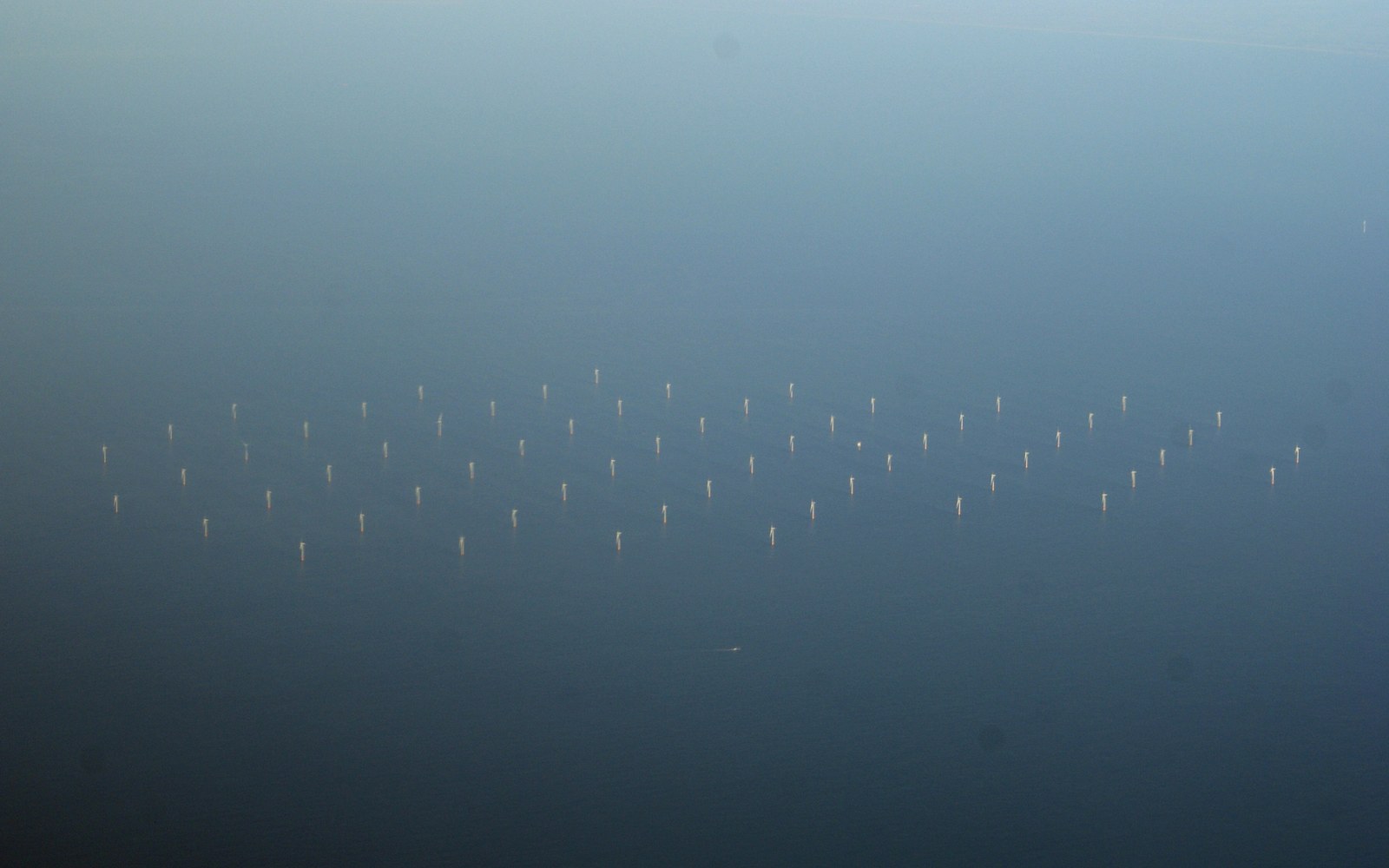
Britain's return to the EU electricity market is filed under Brexit diplomacy, but it will decide how the North Sea grid is built, and that grid comes ashore at ports.
The prime ministers of Belgium, the Netherlands and Luxembourg meet in Maastricht today, 10 November 2026, for a Benelux Summit hosted by Dutch Prime Minister Rob Jetten. Ten days later, on 20 November, EU leaders host the UK in Brussels for the second summit since Brexit. The European Commission wants a package there on food standards, linked emissions trading and a youth scheme. Electricity is not in it: talks on UK participation in the EU internal electricity market will run on beyond the summit.
That is the wrong way round. North Sea governments have pledged 300 GW of offshore wind by 2050, and in Hamburg in January the EU signatories and the UK agreed to develop up to 100 GW of it through cross border projects. A wind farm wired to two countries needs rules for trading between them. Those projects are built from, and often land near, ports whose grids are already congested and which face their own shore power duty by 2029, set out in our AFIR guide for ports.
At a glance
| Measure | Figure |
|---|---|
| North Sea offshore wind target, Ostend 2023 | About 120 GW by 2030, at least 300 GW by 2050 |
| Cross border projects, Hamburg 2026 | Up to 100 GW |
| Great Britain interconnector capacity | 10.3 GW across 10 links |
| LionLink, UK and Netherlands | Up to 2 GW, early 2030s |
| Nautilus, UK and Belgium | 1.4 GW |
| Bornholm Energy Island, Denmark and Germany | 3 GW, €645 million EU funding |
| Rotterdam port area grid queue | 426 MW to 2,068 MW in two years |
| EU UK summit, Brussels | 20 November 2026 |
Where the talks stand
At their first summit on 19 May 2025, the EU and UK agreed to explore UK participation in the internal electricity market, including its trading platforms, and said current trading arrangements would apply in the meantime. Exploratory talks concluded on 22 December 2025 and set the price of entry: dynamic alignment with EU electricity, renewables, environmental and state aid rules; a seat in ACER without a vote; participation in ENTSO-E; arbitration, with the Court of Justice as final authority on EU law; and an appropriate UK financial contribution.
EU ministers gave the Commission its negotiating mandate in March 2026. It covers wholesale and retail markets and ties the electricity agreement to a separate UK contribution to cohesion policy. The two must enter into force together. The UK sits outside the North Seas Energy Cooperation, the forum where the offshore plans are drawn, but has worked with it under a memorandum since December 2022.
The cost of trading at arm's length
Great Britain has ten interconnectors with 10.3 GW of operating capacity, the UK government said in March 2026. Because Britain no longer takes part in the internal market, most capacity rights are sold separately from the electricity. The government concedes that this causes periods of inefficient flows and underused capacity, with power at times flowing from the higher priced market to the lower priced one.
The links still pay. National Grid says its interconnector fleet delivered £1.65 billion of benefits for British consumers over the last three years, compared with gas generation. BritNed, 1,000 MW to the Netherlands since 2011, has traded nearly 93 TWh. Nemo Link to Belgium carries up to 1 GW, and Viking Link to Denmark 1.4 GW since December 2023.
The next generation is harder. LionLink, a hybrid link of up to 2 GW joining Britain, a Dutch offshore wind farm and the Netherlands, moved to an updated joint development agreement between National Grid and TenneT in March 2026. Delivery is expected in the early 2030s; the investment decision is pending. Nautilus, 1.4 GW to Belgium, would land on Elia's Princess Elisabeth Island. A wind farm plugged into two countries earns its revenue in two markets. Without coupled trading, investors must price the friction in.
Energy islands and who pays
Belgium shows what HVDC prices do to plans. In February 2025 Elia postponed the HVDC contracts for Princess Elisabeth Island after bids came in far above its estimates, pushing the project back by about three years. In June 2025 the government and Elia began work on a cheaper concept. Construction of the island continues, as do the AC links for the first 2.1 GW, and the government says a second UK interconnector remains policy.
Bornholm, in the Baltic, offers a template for sharing cost. On 26 January 2026 Denmark and Germany agreed to split support for 3 GW of offshore wind connected to both, in line with expected flows and benefits, backed by €645 million from the Connecting Europe Facility. A North Sea version with the UK would need the same arithmetic, and a market in which those flows trade efficiently.
Ports are where the grid comes ashore
Port Esbjerg says 32 GW of offshore wind turbines have been shipped from its quays since 2001, four fifths of the capacity installed in Europe. Oostende calls itself the offshore wind hub of the southern North Sea; the high voltage station for the Northwester 2 farm was installed from its REBO terminal. The Hamburg leaders called ports critical energy gateways.
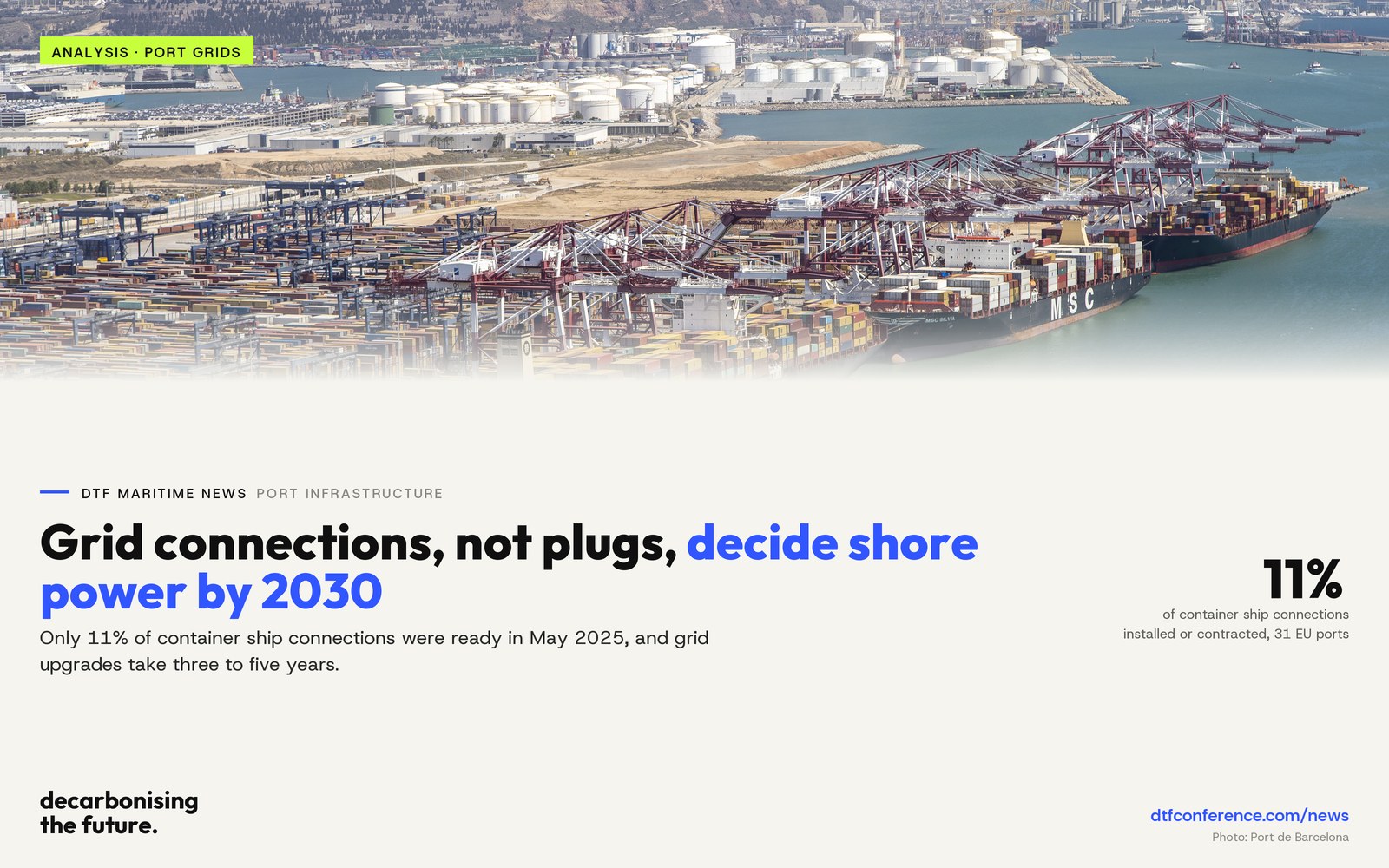
Those gateways have a grid problem of their own. In Rotterdam, TenneT's waiting list for new or heavier connections in the port area grew from 426 MW to 2,068 MW in two years, and the 380 kV Europoort substation meant to relieve it is due in 2032. Under AFIR, TEN-T ports must supply shore power for 90% of calls by large container and passenger ships by 31 December 2029. Rotterdam already has more than 100 shore power installations and over 43 MW. Landfall cables, electrolysers, electric cranes and ships at berth all compete for the same transformer capacity. Our report on port grid connections and the 2030 deadline found that the substation, not the berth, sets the pace.
Carbon crosses the same sea
Electricity is not the only cross border network the region needs. Porthos, the Rotterdam project of Gasunie, the Port of Rotterdam Authority and EBN, will store 2.5 million tonnes of CO2 a year in depleted gas fields under the North Sea. Gasunie now says it will not operate before the second half of 2027. Antwerp@C, backed by €144.6 million of EU funds, plans an export terminal for an initial 2.5 million tonnes a year, shipped across borders to offshore storage.
The case for going slowly
The objections are serious. Dynamic alignment means the UK would take EU electricity rules it does not vote on, with the Court of Justice as final word on EU law. The price is a permanent financial contribution, sized to the UK economy and the share of the market it joins, and the electricity deal cannot enter into force without it. The ETS link carries conditions too: a UK cap at least as ambitious as the EU's, in return for mutual exemptions from the two carbon border adjustment mechanisms.
There is a fair point on money. Hybrid grids move costs between consumers in different countries, and Belgium's HVDC bill shows how fast estimates move. The UK government notes supply chain pressure on high voltage equipment, and permits for landfalls stay national and slow. And the present arrangements work: power flows, and the links earn their keep.
The judgement
None of this argues for waiting. In Ostend in 2023 the UK alone pledged up to 50 GW of offshore wind and at least 18 GW of interconnection by 2030. Hybrid projects heading for investment decisions in the late 2020s need to know which market they will trade in during the 2030s. Leaders should use 20 November to set a date for concluding the electricity talks. North Sea governments should then treat landfall ports, their substations and their shore power duties as one planning problem rather than three.
Ports cannot leave that to the utilities alone, as our analysis of who carries the risk when Europe's ports plug in shows. Port grid planning is a core theme at DTF Barcelona 2027.
The North Sea grid will be built at the quay, and it will only pay if the market behind it is one.