Plugs without power
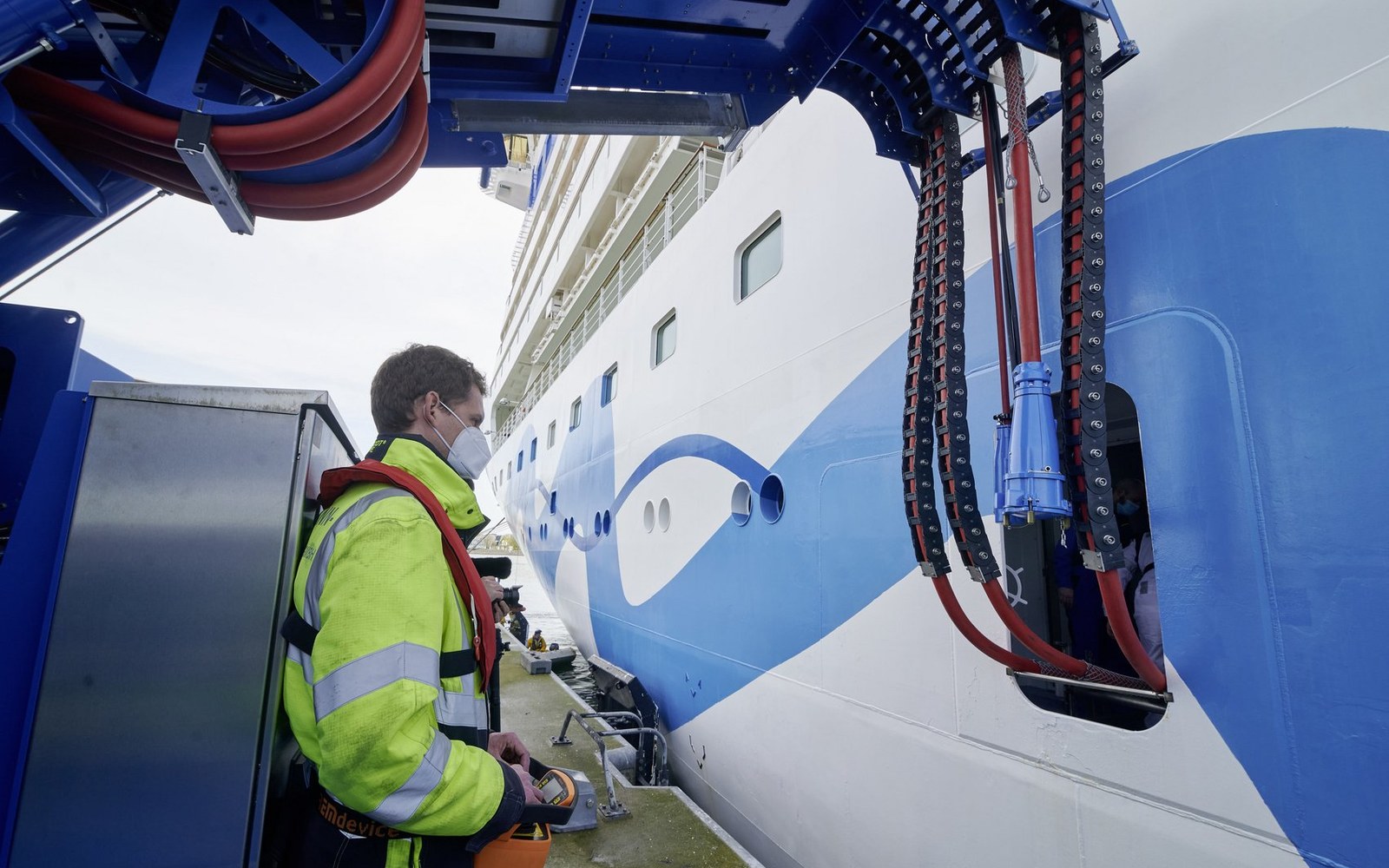
Europe gave ports a shore power deadline and gave the grid none; the AFIR review due by 31 December 2026 is the moment to fix that.
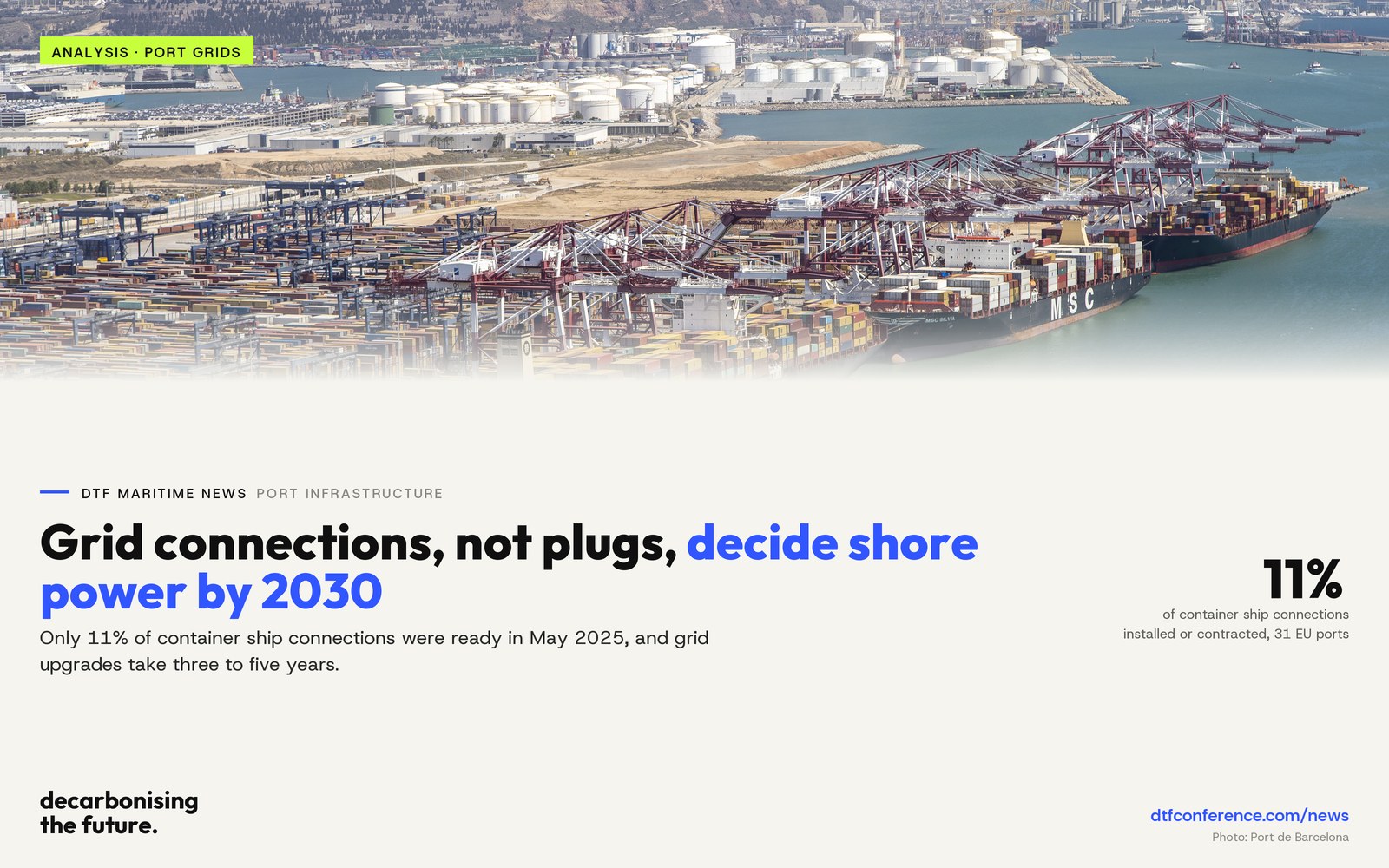
By May 2025, 93 of the 448 shore power connections that EU law requires at 31 major ports were installed or under contract. That is 21%, with under five years to go, and only 11% for container ships. In Rotterdam, the queue for new or heavier grid connections in the port area grew from 426 MW to 2,068 MW in two years, and the 380 kV substation that TenneT expects to relieve it is due in 2032.
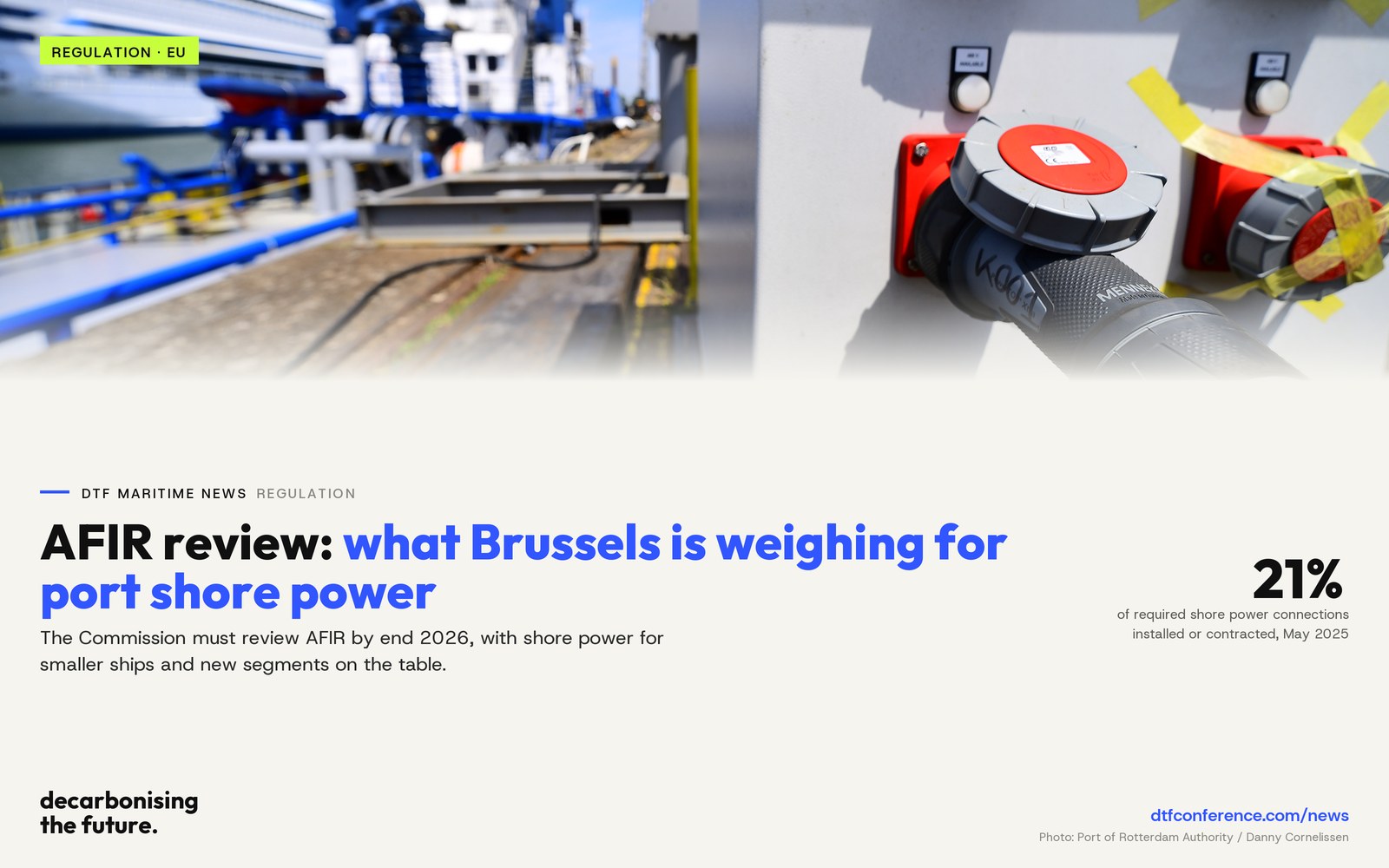
The Alternative Fuels Infrastructure Regulation, AFIR, tells ports what to deliver and when. It says nothing to the grid operators, tax authorities and shipowners on whom delivery depends. The European Commission must review the regulation by 31 December 2026. It should use the review to put the grid and the tax system on the same timetable as the quay, or the 2030 date will be met on paper and missed at the berth. Our AFIR guide for ports sets out the rules in full.
What the law demands, and of whom
Under Article 9, Member States must ensure that TEN-T core and comprehensive maritime ports supply shore power for at least 90% of calls by seagoing container ships and passenger ships above 5,000 GT by 31 December 2029. The duty applies where a port averages, over three years, more than 100 container ship calls a year, more than 40 by ro ro passenger ships and high speed craft, or more than 25 by other passenger ships, cruise included.
The exemptions are narrow. Ports on islands or in outermost regions without a link to a mainland grid are excused until such a link exists or enough local non fossil power is available. Short stays of under two hours, ships using zero emission technology at berth and emergency calls do not count towards the totals. Article 24 already asks the Commission to consider a lower tonnage threshold and more ship types.
The ship side sits in FuelEU Maritime. From 1 January 2030, container and passenger ships above 5,000 GT must connect at berth in Article 9 ports, or pay a penalty of €1.50 multiplied by their power demand at berth and the hours spent unplugged. Yet a ship is exempt where the port has no connection point, or where drawing the power would endanger grid stability. The ship's obligation falls away exactly where the port's has failed. The grid operator, whose substation decides the outcome, carries no obligation in either law.
The numbers
| Measure | Figure |
|---|---|
| Required connections installed or contracted, 31 EU ports, May 2025 | 93 of 448 (21%) |
| Container ship connections ready | 34 of 294 (11%) |
| AFIR shore power deadline | 31 December 2029 |
| Rotterdam port area grid queue | 426 MW to 2,068 MW in two years |
| New Europoort 380 kV substation | 2032 |
| Member States with a shore power tax derogation | At least 8 |
| France's derogation expires | 31 December 2026 |
| EU shore power grants, CEF and AFIF, 2021 to 2025 | About €267 million |
The grid is the critical path
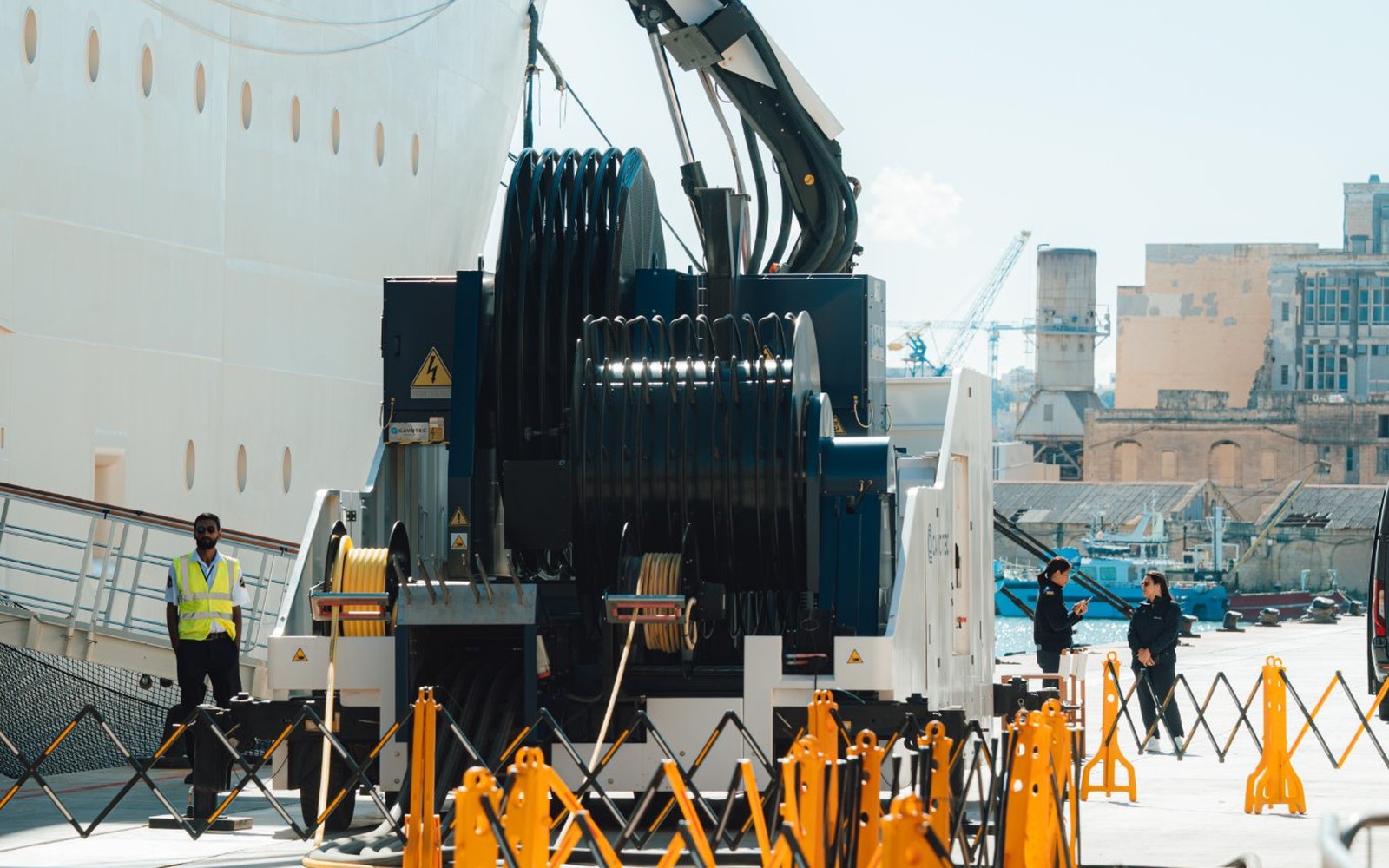
Converters, transformers and cable reels can be bought. A high voltage supply large enough for a cruise ship or a big container ship depends on a grid operator's substations and its queue. Transport & Environment puts the lead time for shore power upgrades at three to five years, which means many berths due in 2029 needed a firm connection date already.
Rotterdam shows the squeeze. The port has more than 100 shore power installations and over 43 MW of capacity, yet its strategy for 2025 to 2035 concedes congestion in parts of the port and looks to mobile units and alternative grid contracts. TenneT expects overload in the port area to grow from 31 MW in 2026 to 244 MW in 2029, the year the AFIR deadline falls.
Where ports have moved fastest, they have built the grid themselves. Barcelona's Nexigen programme, at more than €200 million, rests on a new 220 kV link and a port substation to meet a need of 80 to 90 MW. EU grants for shore power from the Connecting Europe Facility and its fuels facility came to about €267 million across 2021 to 2025, little more than one Mediterranean port's programme.
A background paper for the European Parliament's transport committee in February 2026 warned that shore power planning risks running behind schedule in some Member States. Eurelectric, which speaks for the electricity industry, has asked the Commission for port and grid coordination plans, rules on who pays for upgrades, and freedom for distribution operators to invest ahead of demand. Our report on port grid connections and the 2030 deadline sets out the evidence port by port.
The tax wedge
Under the Energy Taxation Directive, electricity a ship makes on board from its own fuel is exempt from energy tax. Electricity from the shore is not. A Member State that wants a lower rate must ask for a time limited derogation, capped at six years, and win a unanimous Council vote. At least eight have done so.
France's derogation ends on 31 December 2026. Belgium's, running to the end of 2032, is the only one that reaches beyond the 2030 connection mandate. The EU wide fix, a recast of the directive that would let every state cut the tax without asking, failed to win unanimity at ECOFIN on 13 November 2025. The Parliament's tracker lists the file as blocked, and it is not among the Irish Council presidency's taxation priorities for the second half of 2026. A shipowner choosing between the plug and its auxiliary engines therefore faces a price set by geography and by the calendar. Our analysis of shore power electricity tax in EU ports lists every derogation and its end date.
The case for leaving it alone
The strongest argument against reopening AFIR is that deadlines work. Rotterdam's installed base, Barcelona's substation and Belgium's tax relief, secured before its first maritime installation is built, all followed a fixed date. The World Shipping Council says its members are retrofitting ships and ordering new ones with shore power capability. From 2030 FuelEU gives ships a reason to plug in and gives ports paying customers.
There is a fair point on fairness too. Priority in the grid queue for ports means someone else waits longer, whether a factory electrifying its process or a data centre. And conditions written into AFIR could hand slower Member States a ready excuse: blame the grid operator, and the 2029 date dissolves. A review that softens the target would send exactly the wrong signal to ports that have already invested.
The judgement
That case argues for keeping the date, not for keeping the gap. A deadline that binds only one party in a chain of three is not ambitious. It is incomplete. The review should leave 31 December 2029 untouched and add what is missing:
- Grid duty: national policy frameworks should carry joint plans signed by ports and grid operators, with dated capacity for every Article 9 berth, and shore power for those berths should count as a priority connection.
- Tax fix: the Commission should split shore power out of the blocked directive recast and table a narrow, permanent exemption that ministers can agree on its own.
- Accountability: where a grid operator cannot deliver by 2029, the Member State should report a dated recovery plan to the Commission, rather than letting the FuelEU exemption quietly absorb the failure.
None of this costs the target anything. It tells the people who control the substation and the tax rate that the date applies to them as well. Port grid planning is a core theme at DTF Barcelona 2027.
A deadline for plugs without one for power is a deadline for paperwork.
The views expressed are the author's own. DTF Maritime News publishes opinion and analysis from people working on port electrification, alongside its news reporting.