AYK Energy wins record battery contract: 165 MWh for Molslinjen's three electric fast ferries
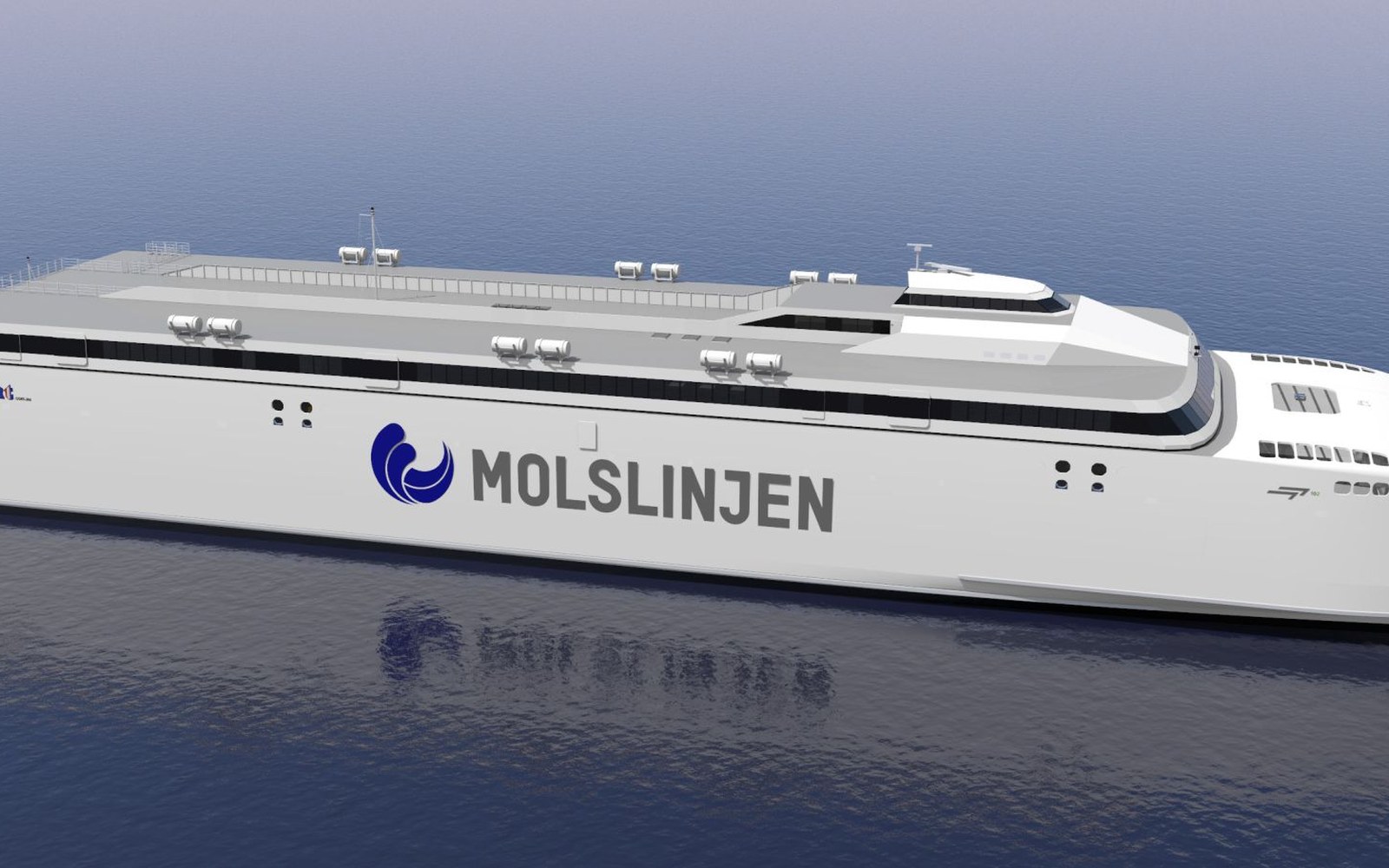
Marine battery manufacturer AYK Energy has won the largest battery contract ever placed in the ferry sector. It will supply 165 MWh of battery systems for three fully electric fast catamarans being built by Incat Tasmania for Danish ferry operator Molslinjen.
Each ship will carry 55 MWh of AYK's DNV type approved Polaris battery system, the largest marine batteries ever ordered for commercial vessels. AYK signed the contract with system integrator Wärtsilä, which will deliver the integrated electric propulsion system and the waterjets.
At a glance
| Topic | |
|---|---|
| Battery supplier | AYK Energy |
| Battery system | Polaris, DNV type approved, LFP chemistry |
| Capacity | 55 MWh per ship, 165 MWh in total |
| Battery weight | Under 400 tonnes per ship, down from more than 700 tonnes first offered |
| Operator | Molslinjen, Denmark |
| Shipyard | Incat Tasmania |
| System integrator | Wärtsilä: integrated electric propulsion and waterjets |
| Ships | Three fully electric catamarans, up to 40 knots, up to 1,500 passengers and 500 cars |
| Charging | High capacity charging in 30 minutes |
| Routes | Between Jutland and Zealand, Denmark |
| Delivery | First ship arrives late 2027, in service Q1 2028; the other two arrive in 2028 and 2029 |
The ships
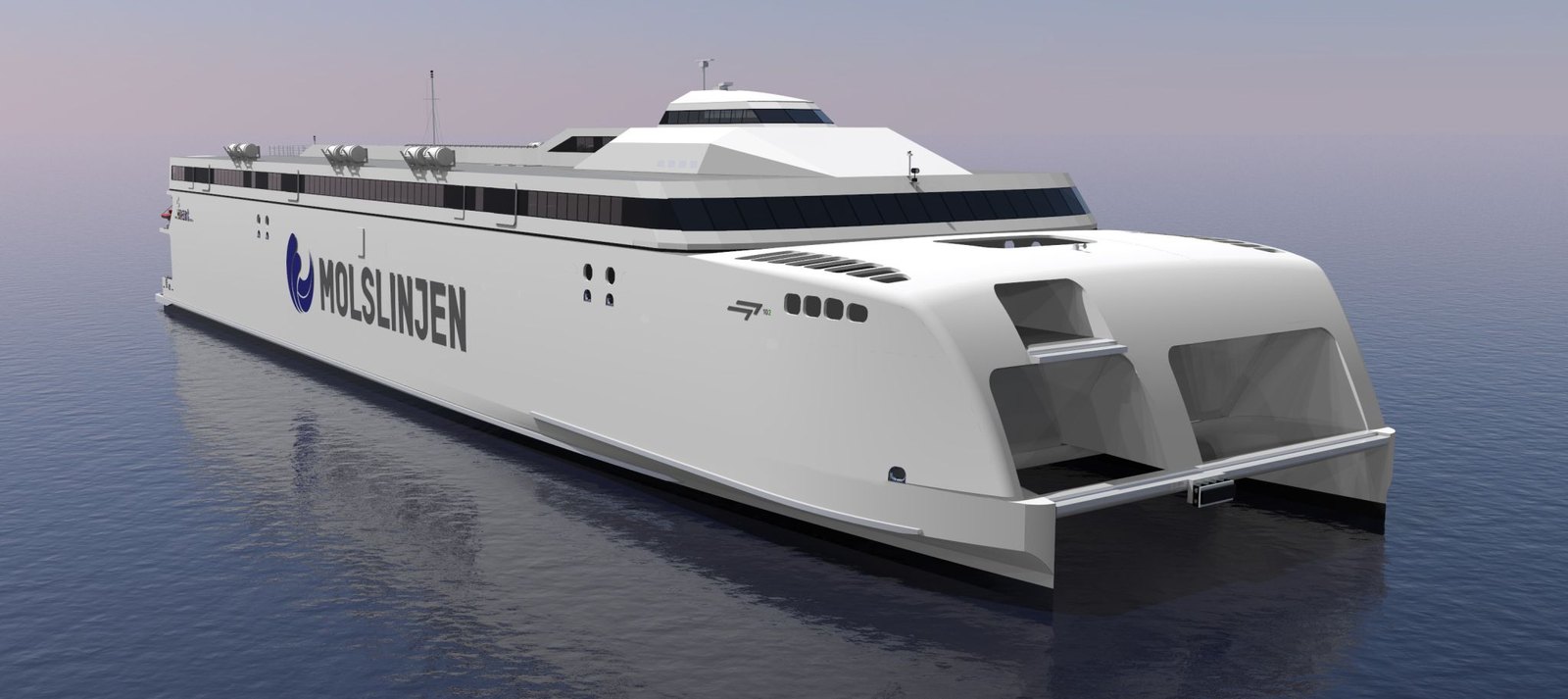
The three catamarans will sail at up to 40 knots and carry up to 1,500 passengers and 500 cars on Molslinjen's routes between Jutland and Zealand. They can take on a high capacity charge in 30 minutes. Once delivered, they will be the largest electric ferries operating in Europe.
The first is expected to arrive in Denmark in late 2027 and to enter service in the first quarter of 2028. The second and third follow in 2028 and 2029.
For scale, the largest battery in commercial service today is the 41 MWh system on Buquebus's China Zorrilla, also built by Incat. Each of the Danish ships will carry a third more.
Cutting 300 tonnes
Weight decided the contract. When Molslinjen first went to the market almost two years ago, AYK could offer battery packs weighing more than 700 tonnes. The first battery to reach the yard in Tasmania will weigh less than 400 tonnes.
"We decided to rethink the battery's design from the ground up to reduce weight and improve performance," said Chris Kruger, AYK's founder. "With new battery cells, inspiration from manufacturing techniques in the automotive industry and a lighter, stronger aluminium structure, we can store more energy per kilogram and deliver more power. At the same time, we have adapted the technology to the specific requirements of the marine environment and integrated our patented solutions for fire suppression and limiting overheating within the battery modules."
Carsten Jensen, CEO of Molslinjen, said the weight saving tipped the balance. "We are pushing the boundaries of technology here, and the combined weight of the vessel and its batteries will be crucial to operating such large vessels at high speed across the Kattegat. So when AYK managed to significantly reduce the weight of its batteries without compromising power, that tipped the balance. This provides a proven level of safety that is on a par with, or probably even better than, what we have with diesel today. This was also a decisive factor in our choice of supplier."
Safety first
Kruger, one of the earliest pioneers of marine batteries, said the deal showed the strides being made at the frontier of the technology.
"AYK is immensely proud to provide our new Polaris battery systems for these ferries," he said. "This is genuinely an inflection moment for electric ships. It is also the result of enormous hard work over more than a decade by those of us who have believed in electric ships."
"AYK's approach has always been led by safety first. There is massive pressure to improve energy density and raw power, but this cannot happen overnight, especially in the rugged conditions of the sea. This is not a car where the driver can simply step out onto the road if there is a fire. This is the reason AYK secured the first type approval of LFP battery technology, which is considerably safer than the previously used NMC chemistry."
For Wärtsilä, the challenge is balance. "The speed how AYK is bringing latest LFP technologies into the marine industry is impressive," said Dr Torsten Büssow, Director of Wärtsilä's electrical integrator. "For large ferries we have to find a balance between short high power charging and long high energy sailing times combined with a weight challenge on aluminium catamarans like these."
The port side
A 55 MWh battery refilled in 30 minutes puts the terminal at the centre of the operation. Molslinjen's ships will charge at Aarhus and Odden, where an automated system from Wabtec is designed to deliver up to 55 MW, as DTF reported in its coverage of Wabtec's FerryCHARGER. Every turnaround becomes a large, scheduled draw on the local grid. DTF's guide to shore power explains how ships connect at berth.
A growing order book
The contract comes as demand for AYK's batteries rises across bulk carriers, cruise ships, icebreakers, ferries and workboats. In the last year AYK has:
- signed an agreement to supply Germany's new polar research ship Polarstern
- installed two 12 MWh Orion+ batteries on Brittany Ferries' hybrid electric ships Guillaume de Normandie and Saint Malo, among the largest marine battery systems ever built
- delivered a 6 MWh battery for Svitzer's battery methanol tug, the first of its kind, covered by DTF in AYK's Svitzer deal
About AYK Energy
Chris Kruger founded AYK in 2018 to produce a low cost battery with superior performance and safety that exceeds class and industry standards. He moved to marine from the electric car industry and developed the battery for the first hybrid ferry, Prinsesse Benedikte, and for the first fully electric ferry, Ampere, in 2012. A South African now based in Andorra, he opened AYK's first factory in China in 2023, close to the battery supply chain, which he says is ten years ahead of Europe.
Why it matters for ports
- Lighter batteries make large, fast electric ferries possible, and each one turns its terminals into high power charging sites.
- With delivery from late 2027, Aarhus and Odden become a working test of how a port grid copes with fast ferry charging at this scale.
Electric ferries and the port power behind them will be on the agenda at DTF Malta 2027.
Three ferries, 165 MWh and 300 tonnes saved: the largest battery order in ferry history was won on weight.