The kilowatt hour is the cargo
Ports are becoming some of the largest electricity customers on their coasts, and the ones that run their power like a utility will set the terms.
Between April 2026 and December 2030, the Los Angeles Department of Water and Power (LADWP) is laying 16 new 34.5 kV underground circuits through the Port of Los Angeles, adding three switching stations and expanding two receiving stations. The project adds 200 MVA of capacity. LADWP says it is needed for the port's goal of zero emission cargo handling equipment by 2030 and zero emission trucks by 2035. Today 14% of that equipment is zero emission.
Ports used to buy electricity the way a business park does: lighting, reefer plugs, a few electric cranes. That era is ending. Yard tractors, straddle carriers, tugs, ferries and ships at berth are all moving to the plug, and together they turn the port into one of the largest loads on its coast. Our shore power guide covers the berth; the harder questions sit behind it.
Who owns the substation, who buys the power and who sells it on to the ship or the terminal? The answers decide who captures the margin and who carries the risk. There are three working models. The evidence favours ports that behave like utilities, at least over the last mile.
The load arrives all at once
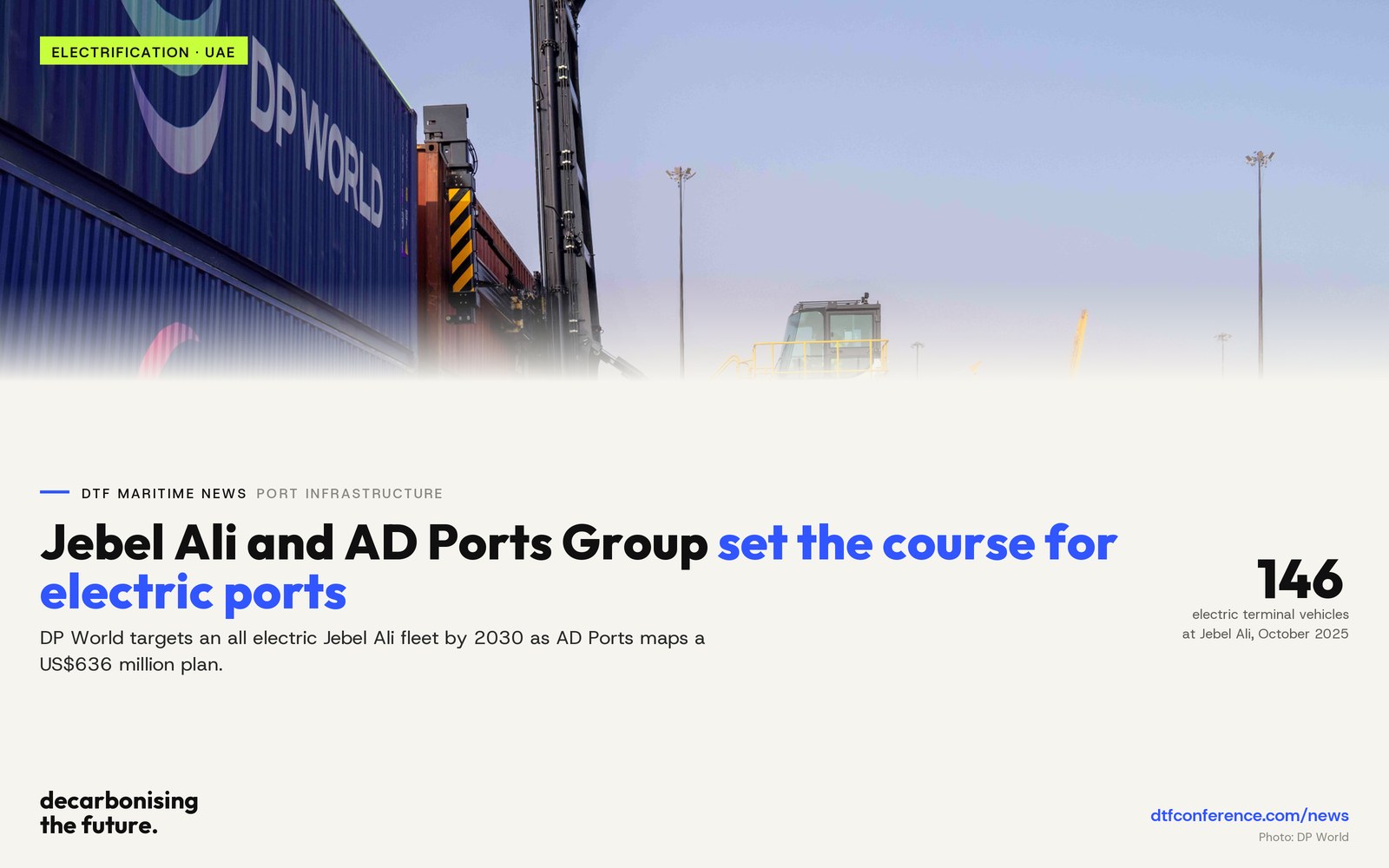
Electrification does not creep. At Jebel Ali, DP World went from 14 electric terminal vehicles in December 2024 to 146 in October 2025, and aims to put all of the port's diesel and petrol equipment on electricity by 2030. In Abu Dhabi, AD Ports Group has set out 139 decarbonisation initiatives to 2050 with a projected US$636 million of investment, including electric tugs and shore power.
The grid studies show what that does to demand. A June 2023 assessment by EPRI for the Port of Los Angeles found that one receiving station transformer bank serving the port peaked at 119 MW in 2021. Charging for terminal equipment alone could add 128 MW with managed charging and 191 MW without it. In Oakland, the port expects demand on its own network to grow four to fivefold over five years, to as much as 100 MW. Barcelona puts its future need at 80 to 90 MW.
Los Angeles is also buying in bulk. Its US$412 million federal Clean Ports grant, awarded in October 2024, funds nearly 425 battery electric cargo handling units, more than 300 chargers and 10 battery storage systems.
Model one: the port as energy company
The purest case is Oakland. Port Public Power is a publicly owned electric utility run by the port, which says it is the only one at a major California seaport and airport. It serves tenants and port facilities, draws on owned generation, long term power purchase agreements and wholesale markets, and works through the Northern California Power Agency. In 2025, 84% of the electricity it delivered came from renewable and zero carbon sources.
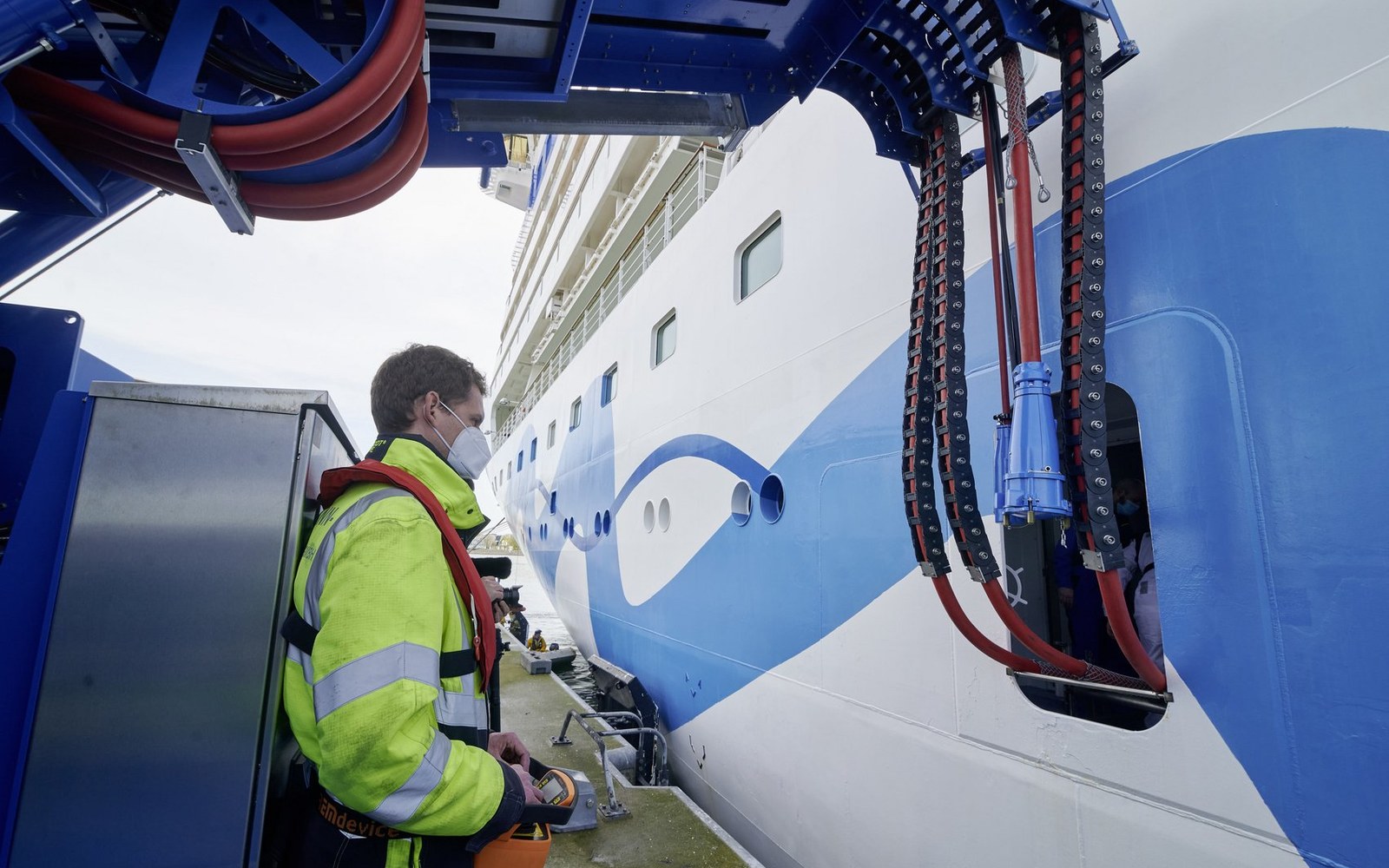
Hamburg sells shore power directly. The Hamburg Port Authority is the contracting party for shore power, with a tariff per kWh that covers energy procurement and operation as well as grid fees, taxes and levies. On 9 July 2026 it signed an agreement with Hapag-Lloyd covering supply at all terminals.
Rotterdam took a partner. In April 2023 the Port of Rotterdam Authority raised its stake in Rotterdam Shore Power, its venture with Eneco, from 20% to 50%. The company develops, invests in and operates shore power. In March 2026 the port signed a €90 million European Investment Bank loan for 35 container ship connections along eight kilometres of quay, to enter service from the second half of 2028.
The Spanish ports are building the hardware. Valencia is tendering a 132/20 kV substation to connect its own port network to the high voltage grid, estimated at €14.5 million. Barcelona plans a new port substation, fed at 220 kV, with a medium voltage network to every shore power berth.
Model two: the utility builds, the port waits
Los Angeles shows the utility model at its best. The port and LADWP are both departments of the same city, and the utility can spread a 200 MVA build across a large customer base. The port asks; the utility plans, finances and delivers.
Dubai works the same way on supply. DEWA issued more than 200,000 renewable energy certificates to DP World in 2023, each for one MWh, from the Mohammed bin Rashid Al Maktoum Solar Park. DP World said this put Jebel Ali Port on fully renewable power and cut its UAE emissions by 47%.
The weakness is the queue. A port served by a utility waits behind data centres, factories and housing, as Rotterdam knows: the waiting list for grid capacity in its port area grew from 426 MW to 2,068 MW in two years.
Model three: the terminal pays
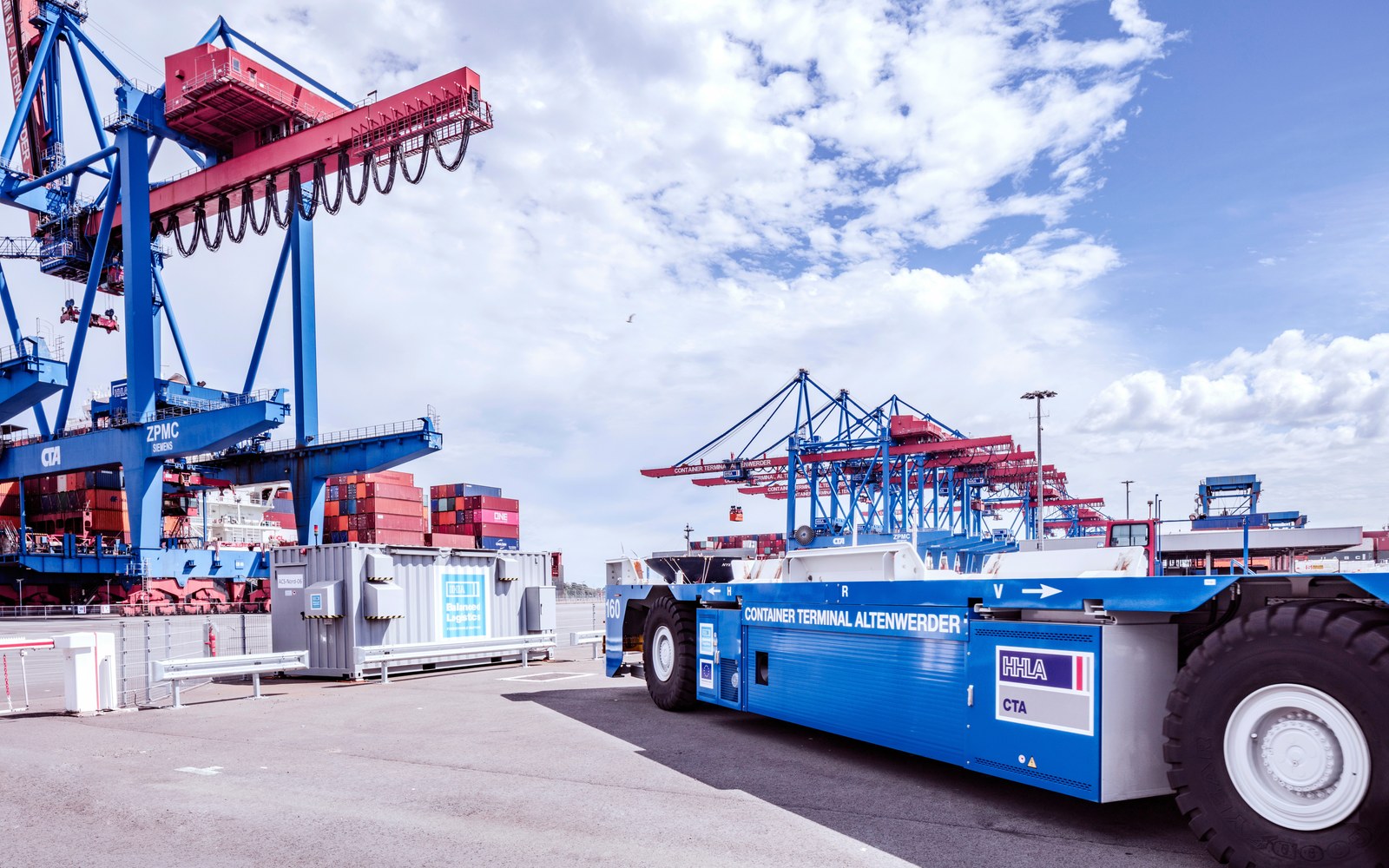
In the concession model the operator buys the machines and, often, the connection. On 27 August 2026 Los Angeles approved a 30 year lease for Yusen Terminals on 232 acres, through 2056, with the operator committing US$200 million to zero emission equipment. In Hamburg, HHLA's Altenwerder terminal retired its last diesel automated guided vehicle in late 2023 and now runs 95 battery units charged at 18 fast charging stations.
At Antwerp, PSA Antwerp is spending about €10 million on a 7.5 MW shore power installation at Europa Terminal, including an upgrade of the terminal's high voltage grid connection. The operator controls the load, so it is well placed to manage it. Its horizon, though, is the length of its lease, and it buys power at retail.
| Measure | Figure |
|---|---|
| LADWP capacity for Port of Los Angeles, 2026 to 2030 | 200 MVA |
| Los Angeles zero emission cargo handling equipment | 14% now, 100% target by 2030 |
| Added load from terminal equipment charging, Los Angeles | 128 MW managed, 191 MW unmanaged |
| Oakland port utility demand outlook | Up to 100 MW in five years |
| Barcelona port power need | 80 to 90 MW |
| Jebel Ali electric terminal vehicles | 14 (Dec 2024) to 146 (Oct 2025) |
| AD Ports Group decarbonisation plan | US$636 million, 139 initiatives to 2050 |
| Rotterdam Shore Power, port stake | 50% since April 2023 |
The case against ports as utilities
Ports are not utilities, and the case for keeping it that way is serious. Selling electricity brings licences, tariff rules, metering, taxes and liability. EU law lets Member States classify a confined industrial or commercial site as a closed distribution system, with some relief such as exemption from prior tariff approval. It remains a national choice, and the operator is still a distribution system operator with duties to match.
A port that retails power also inherits its tax. Hamburg's tariff carries statutory grid fees, taxes and levies that the port cannot waive. Then there is volume risk. Hapag-Lloyd says about 35% of its fleet is fully equipped for shore power. A substation built for ships that do not plug in is a stranded asset on the port's balance sheet.
Ownership does not create grid capacity either. Rotterdam still depends on the 380 kV Europoort substation that TenneT expects in 2032. Utilities borrow cheaply and spread costs across millions of customers. Even Rotterdam chose a utility partner and public debt rather than going alone.
The judgement
The answer is a division of labour. Transmission and bulk supply should stay with utilities. The last mile should belong to the port: the port substation, the medium voltage network, the meters and the customer relationship with ships and terminals. That is where demand can be pooled, charging scheduled and power bought wholesale or under long term contracts, as Oakland and Hamburg already do.
Concessions should then carry energy terms as standard: expected load, charging windows, data sharing and who pays for the connection. Los Angeles wrote zero emission equipment into the Yusen lease; the next step is to write the power into it. The numbers from Jebel Ali and AD Ports and the Port of Los Angeles emissions inventory show how fast the load is coming. Port grids are a core theme at DTF Barcelona 2027.
The port that owns the last mile of cable will set the price of every kilowatt hour that crosses its quay.
The views expressed are the author's own. DTF Maritime News publishes opinion and analysis from people working on port electrification, alongside its news reporting.