Oakland's own utility delivers 84% clean power as port demand heads for 100 MW
The Port of Oakland runs its own electricity utility, and it is getting cleaner as demand climbs. Port Public Power says 84% of the electricity it delivered to port tenants and facilities in 2025 came from renewable and zero carbon sources.
At a glance
| Topic | |
|---|---|
| Utility | Port Public Power, owned by the Port of Oakland |
| Renewable and zero carbon share, 2025 | 84% |
| Renewables | 61%, against a 46% California utility average |
| Large hydro | 21% |
| Carbon intensity | 186 lbs CO2e per MWh, against 384 lbs for the average California utility |
| Expected demand | Four to five times higher in five years, up to 100 MW |
| Storage | 20 year agreement for 4 MW of battery capacity |
Cleaner than the state average
Renewables made up 61% of the supply, well above the 46% average for California utilities, with geothermal the largest source, followed by solar, biomass and biogas, and small hydro. Large hydroelectric power added 21%. The result is a carbon intensity of 186 lbs of CO2e per MWh, less than half the state average of 384 lbs. The port's board approved the figures on 22 October for filing with the California Energy Commission.
A port that buys its own power
Because the port is its own utility, it decides where its electricity comes from and how its network grows. Port Public Power is a member of the Northern California Power Agency, supports California's goal of 100% clean electricity by 2045, and in 2025 signed a 20 year agreement for 4 MW of capacity at a battery storage facility in San Bernardino County.
That control matters because demand is about to jump. The port expects electricity use to grow four to five times over the next five years, to as much as 100 MW, as tenants replace diesel equipment and vehicles across the seaport and Oakland airport. It is modernising, expanding and replacing ageing electrical infrastructure to keep up.
The first fully electric terminal
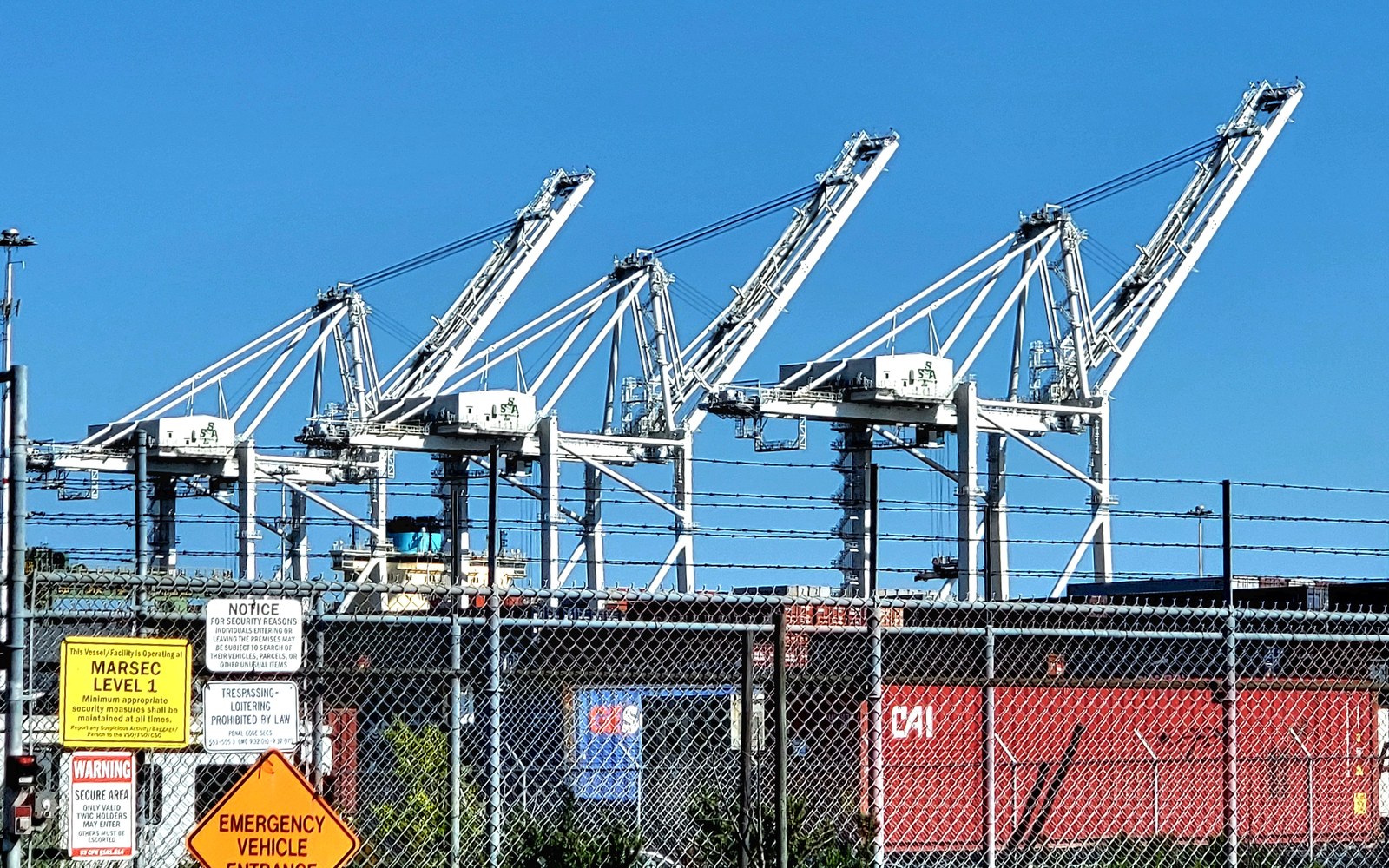
Some of that demand is already funded. California has awarded US$119 million to convert the cargo handling fleet at Matson Terminal, run by SSA Terminals, to zero emission equipment, with completion targeted for 2028. It will be Oakland's first container terminal where every machine in the yard runs without diesel.
Why it matters for ports
- Electrified terminals move a port's energy use onto the grid. Owning the utility lets Oakland plan supply and network together.
- A fourfold rise in demand within five years is the scale other ports should expect as cranes, trucks and ships plug in.
- Clean supply is what makes electrification count: the same machines on a fossil heavy grid deliver far smaller cuts.
For another port taking charge of its own power, see The kilowatt hour is the cargo.
84% clean today, up to 100 MW tomorrow: Oakland is running its port like a power company.